Engineering Insights
Porous Metal Mold Vents: When They May Help and What Buyers Should Check
Porous-metal vents can help trapped-air locations, but add design, surface and maintenance questions. Use this checklist to compare them with conventional venting before committing to the mold.
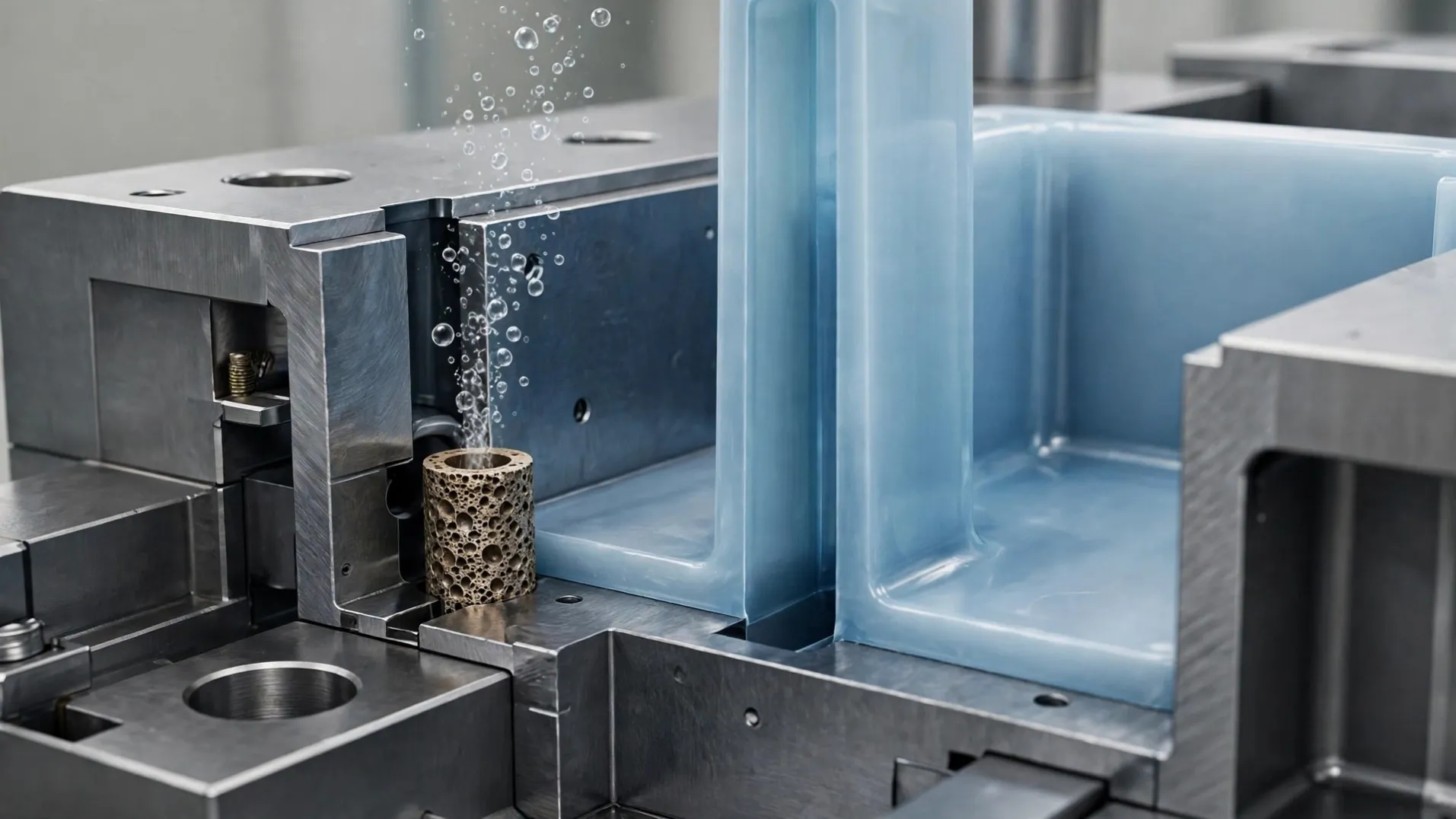
A burn mark, short shot, or surface blemish near a deep rib can lead to a quick suggestion: "Add a porous-metal vent." That may be worth evaluating, but it is not a default fix. The team first needs to confirm that trapped air is involved and determine where the air must escape.
Autodesk's Moldflow documentation explains that air traps can occur when flow fronts converge or when air is trapped against a cavity wall. Depending on the condition, they can contribute to incomplete filling, surface blemishes, or burn marks. A vent insert only helps if its location and gas path address the actual trapped-air region.
Start with evidence of the air trap
Before selecting a vent type, compare the defect location with the filling pattern and trial evidence. Check whether the issue occurs consistently at the same last-to-fill region, how it changes by cavity, and whether it coincides with a weld line, a flow hesitation, a thick-to-thin transition, or a material/process change.
If simulation is available, review the modeled material, part and runner revisions, process assumptions, and the predicted air-trap locations. Treat the result as a guide to where to investigate, not proof that the physical tool will behave exactly as simulated. Compare it with trial observations and the actual part.
If the evidence points to another cause, such as material degradation or a process problem, a new vent component may not address it. Keep the cause and the proposed tool change separate in the review record.
Compare the available venting paths
A mold designer may consider several approaches depending on the part and tool:
- a vent at the parting line or another accessible mold surface;
- a vent pin or ejector-related path where the design permits;
- a machined vent insert;
- a porous-metal insert that lets gas pass through a porous surface into a designed outlet path;
- a change to gate, runner, or flow layout that moves the last-to-fill region to a more serviceable location.
These options are not interchangeable. A porous insert can make venting possible at a location where a conventional machined channel is difficult, but it still requires a path from the porous region to an outlet. Confirm how that path is formed, how the insert is supported, and how the design protects the part surface and the mold structure.
Review six questions before committing
1. Is the location confirmed?
Identify the predicted and observed trapped-air location on the part and tool drawings. Confirm which face is safe for the feature and whether the proposed vent aligns with the actual end-of-fill region.
2. Where does the gas go?
Ask the tool designer to show the full route from the cavity-facing porous area through the insert and backing passage to an outlet. A porous surface without a clear outlet path is not a complete venting design.
3. What supports the insert?
Review the insert dimensions, surrounding steel, mounting method, sealing, and load path. The required support depends on the tool geometry, molding pressure, material and insert specification. Do not reuse a supplier's nominal product data as a substitute for checking the actual mold design.
4. What surface will the part show?
Determine whether the porous region contacts a cosmetic, sealing, or functional surface. Ask whether the insert can leave a visible witness, texture, or local appearance difference. If that area is appearance-critical, include it in the sample acceptance plan.
5. How will contamination and cleaning be managed?
Porous openings can require different cleaning and service practices from a conventional vent groove. Ask what resin, release agent, oil, or debris could reach the insert; how a blocked path will be recognized; and what cleaning method the insert supplier permits. Confirm that the mold can be accessed for inspection without damaging the insert.
6. What trial evidence will confirm the result?
Agree on the original defect location, trial condition, sample identity, and acceptance method before the tool change. Check whether the change improves the trapped-air symptom without creating flash, surface marks, fill imbalance, or a new maintenance problem. The project should record the result and the required inspection interval.
When a porous insert may not be the best first choice
A porous-metal insert may be a poor fit if the root cause is not trapped air, if the required area is structurally weak or inaccessible, if the surface witness is unacceptable, or if the production environment cannot support the required cleaning and inspection. A gate or runner change, conventional vent, vent pin, process review, or material investigation may be more appropriate.
The right choice depends on the part, mold, resin, appearance requirements, production volume, and maintenance capability. There is no universal pore size, vent dimension, or cleaning interval that applies to all tools.
For a broader review of flow-analysis evidence before steel cutting, see How to Review a Moldflow Report Before Steel Cutting. For a specific relay-housing case involving deep ribs and ejection, see Relay Housing Mold Case: Deep Ribs, Fit and Ejection; that case is not evidence that every similar feature needs a porous insert.
Questions buyers ask
Will a porous vent eliminate burn marks?
No component can guarantee that. Burn marks can have more than one cause, and the vent location must correspond to the trapped-air condition. Validate the proposed change against the trial evidence.
Does the porous insert need a separate gas passage?
The tool designer should show how gas leaves the insert and reaches an outlet. Confirm the complete route in the mold design rather than assuming the porous material vents to the atmosphere by itself.
Can it be installed on any surface?
The location must be checked for venting benefit, structural support, molded-part appearance and function, and access for service. The material and insert supplier's installation limits also apply.
What information should a buyer request?
Ask for the identified air-trap location, proposed vent cross-section, outlet path, insert specification, surface impact, support detail, approved cleaning method, and trial acceptance plan. Share confidential drawings only with permission and through an agreed secure route.
For a non-confidential engineering discussion about a venting concern or a mold design review, use the Jeancen Mold project inquiry page.