Colour fade and surface degradation outdoors.
Standard indoor grades chalk, fade and micro-crack under sustained sun and coastal exposure, while the metal profile they sit in lasts for years.
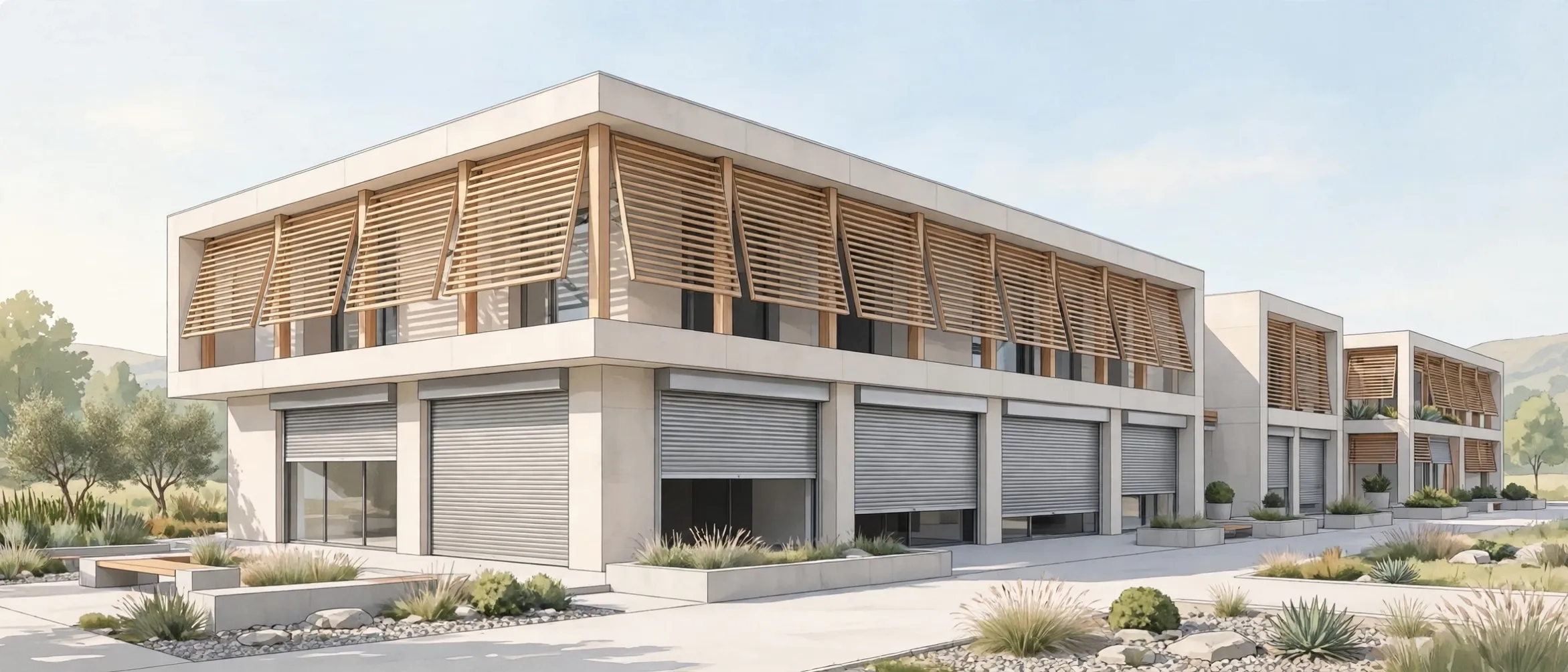
Custom injection molding
Plastic parts for the systems your customers see every day — and open, close, and rely on outdoors.
Small-batch trial orders accepted. Free initial DFM review. Reply within 12 hours.
We make custom injection-molded end caps, brackets, connectors, guides and housings for shading, blind, roller shutter, roller door and door-window systems.
Materials are reviewed per project — ASA, PP, PA66+GF, PC/ABS, POM and TPU — against outdoor exposure, fit with metal profiles, and assembly requirements.
Manufacturers, brands and OEMs building shading, blind, shutter, roller door and door-window systems — especially SMEs with their own products and R&D who need mold and injection support for plastic accessories that must fit metal profiles and survive outdoors.
Standard indoor grades chalk, fade and micro-crack under sustained sun and coastal exposure, while the metal profile they sit in lasts for years.
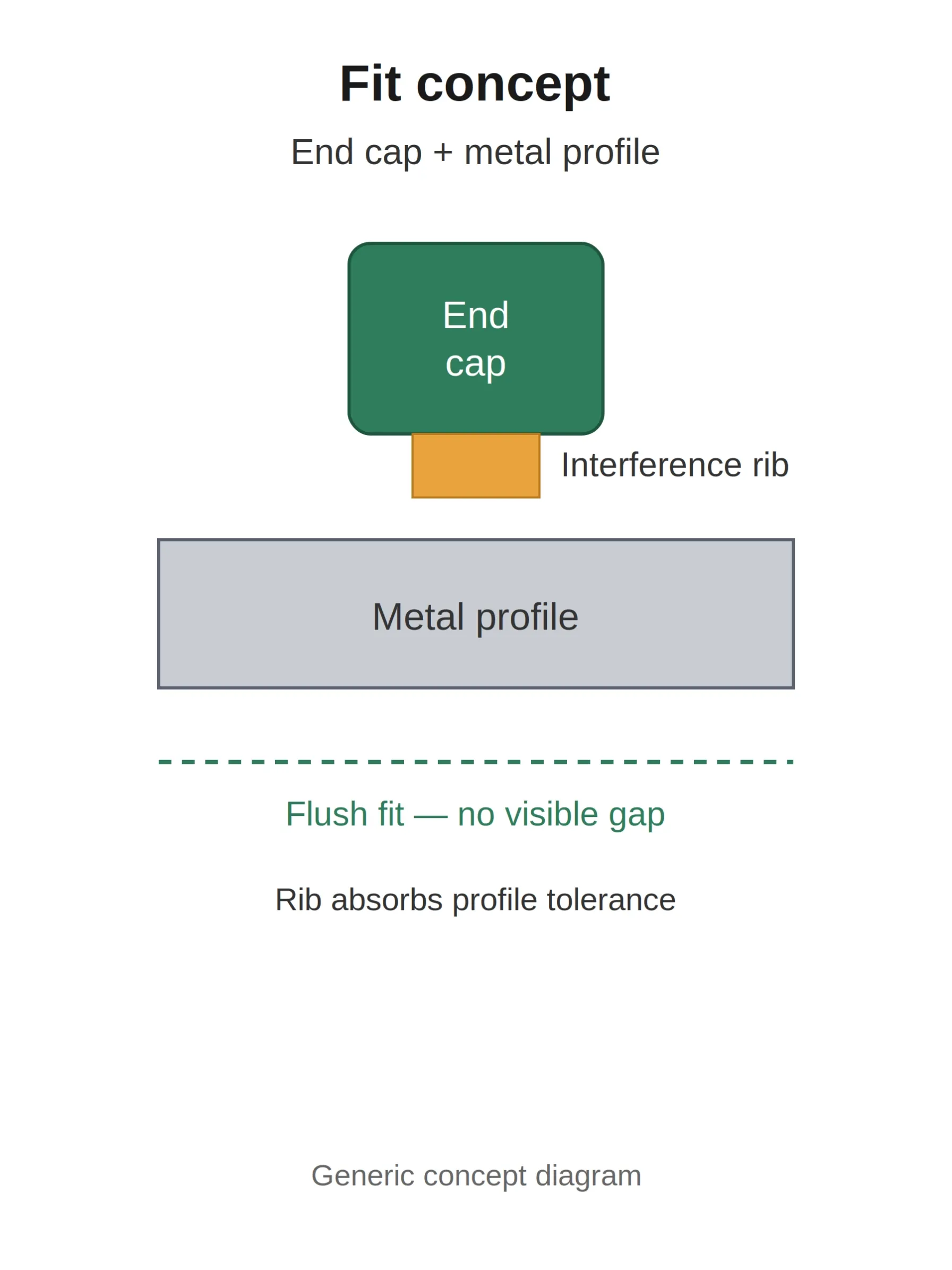
Metal profile and coating tolerances vary from batch to batch. A part that is too tight fails assembly; a part that is too loose falls off.
End caps and covers with long flat geometry lift at the edges through thermal cycling, breaking the flush look of the system.
Nylon parts absorb moisture and grow; sliding fits designed only from nominal dimensions drift out of tolerance in service.
End caps, covers, structural covers / ASA as an upgrade from indoor ABS / POM grades / Outdoor UV and weather resistance, colour stability, and a service life that matches powder-coated aluminium and steel systems
Sliding and wet-environment functional parts / PA66+GF, grade and glass content set by sample validation / Strength and stiffness, dimensional stability in wet conditions, wear resistance and self-lubrication in sliding contact
Grommets, guides, seals, moving components / TPU, hardness selected per project / Flexibility across temperature range, abrasion resistance for idlers and guides, and consistent fit over coated steel
Brackets, connectors, housings / PP, PC/ABS, POM, selected per project / Balanced against strength, fit, appearance and cost for the specific part. Material suitability is confirmed per project. No material is promised for every part.
Material direction is set by comparison and sample validation, not by datasheet alone: candidate grades are tested in real assembly before tooling is locked, and moisture-related dimensional change is considered at the design stage, not discovered after production.
Draft is preserved on functional mating surfaces where fit requires it, ejection is planned before steel is cut so glass-filled parts release without stress marks, and grip surfaces are textured where assembly needs friction.
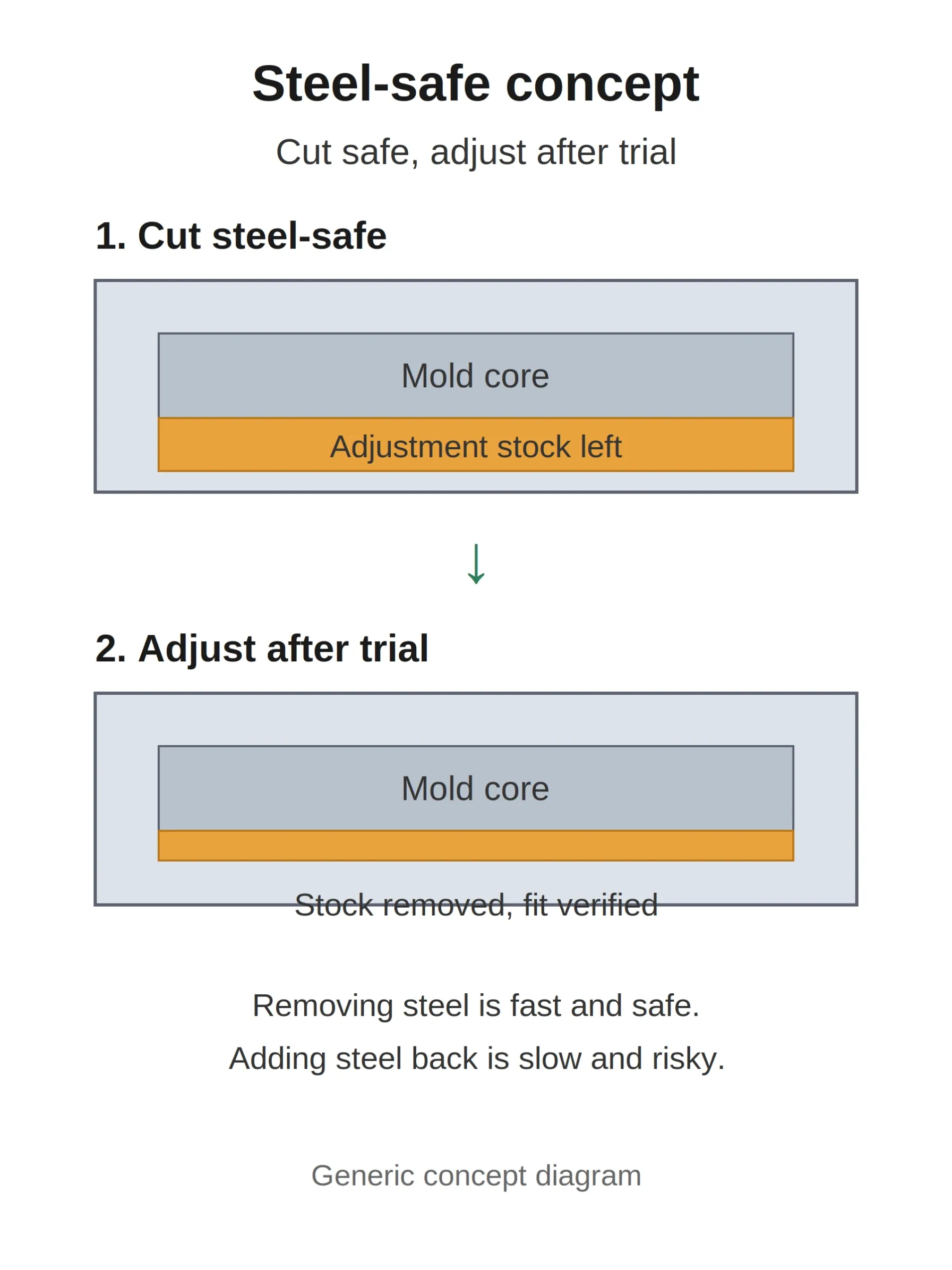
Coating thickness on galvanised and powder-coated profiles varies, so the mold core is cut steel-safe: intentionally left with adjustment stock, then micro-adjusted after trial measurement against real profile samples.
Soft TPU parts are ejected with a stripper-plate approach rather than pins that could pierce or distort them, so the profile stays true for assembly.
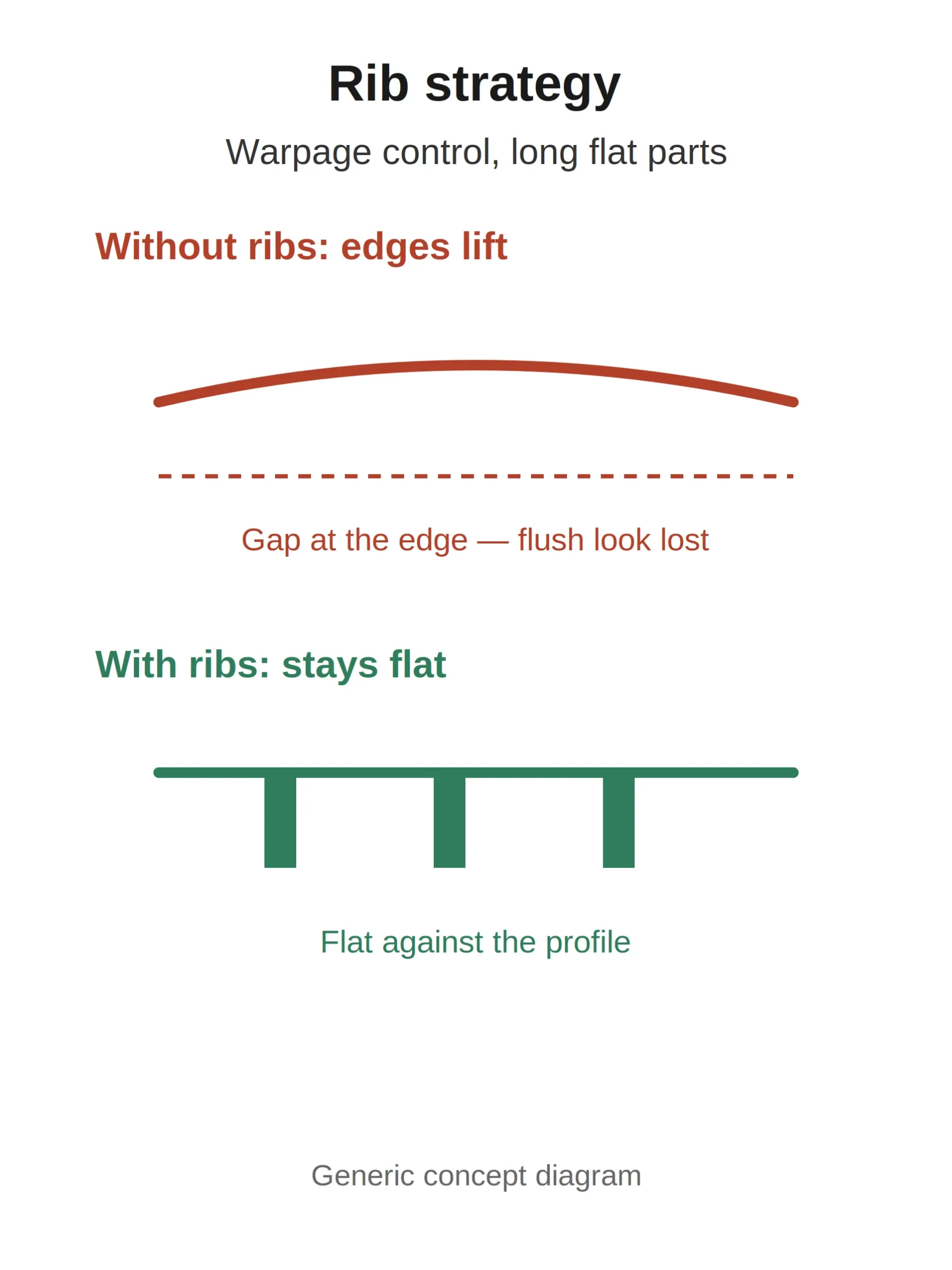
For long, flat end caps that must sit flush against aluminium profiles, wall thickness and internal ribbing are planned for uniform cooling to control warpage, and interference ribs with a straight section absorb extrusion tolerances so the fit stays tight through thermal expansion and contraction.
ASA is selected where outdoor UV stability and colour retention are the deciding requirements.
Jeancen is an integrated injection mold and injection molding factory in Xiamen, China. Our mold engineers bring 12+ years of mold design experience to early DFM review, mold design and manufacture, T0/T1 trials, and injection production support.
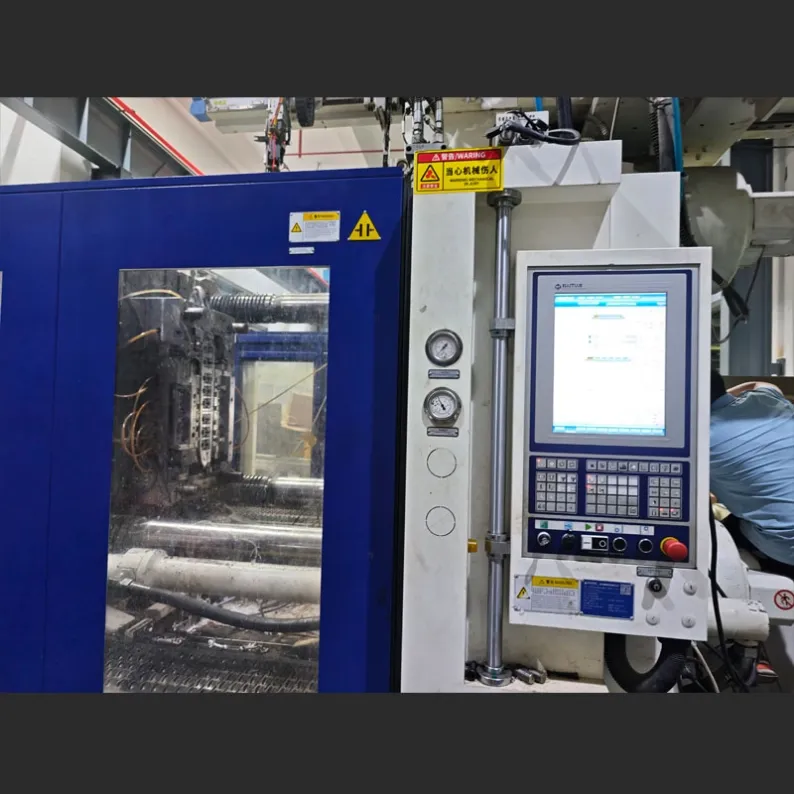
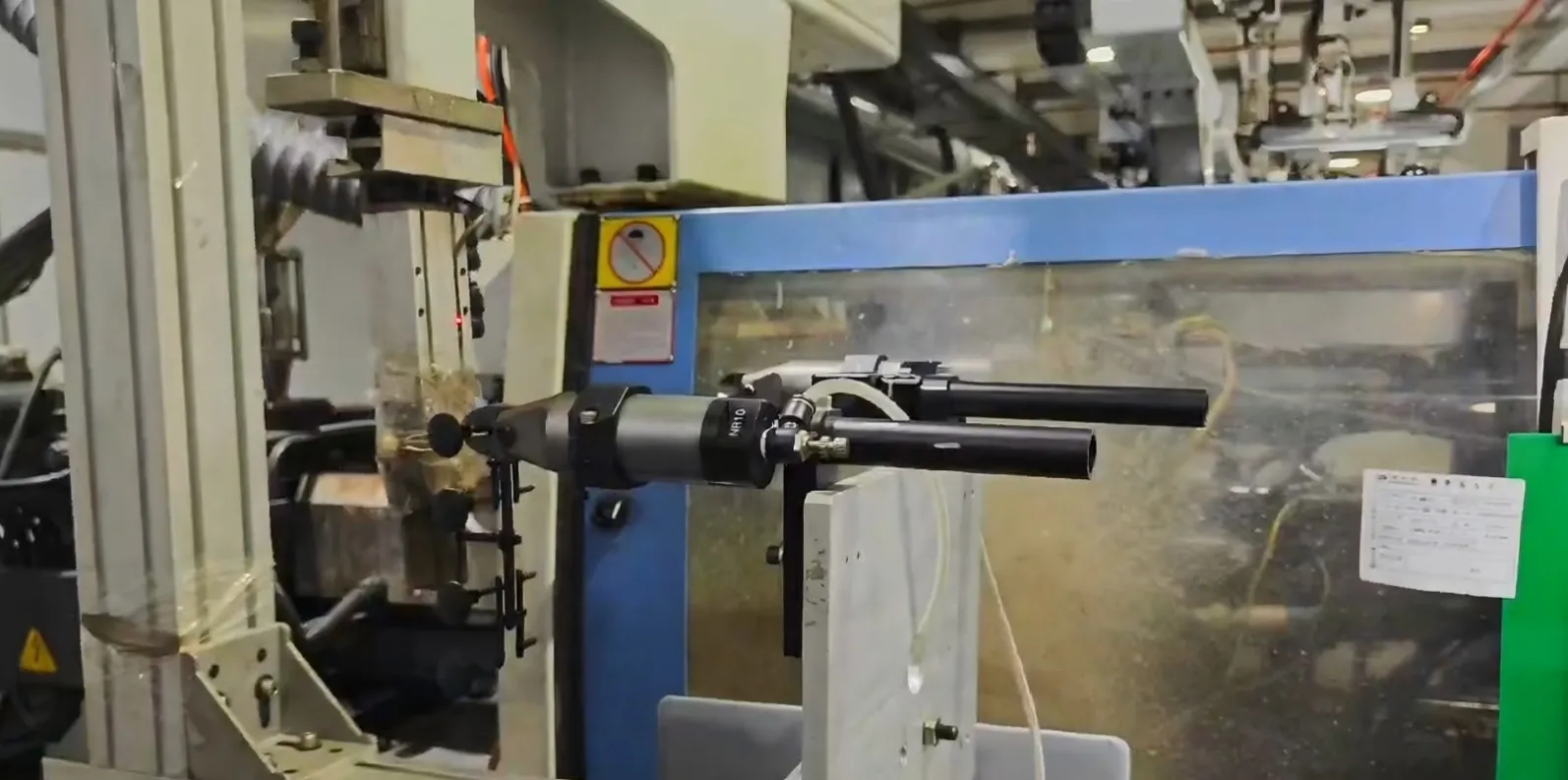
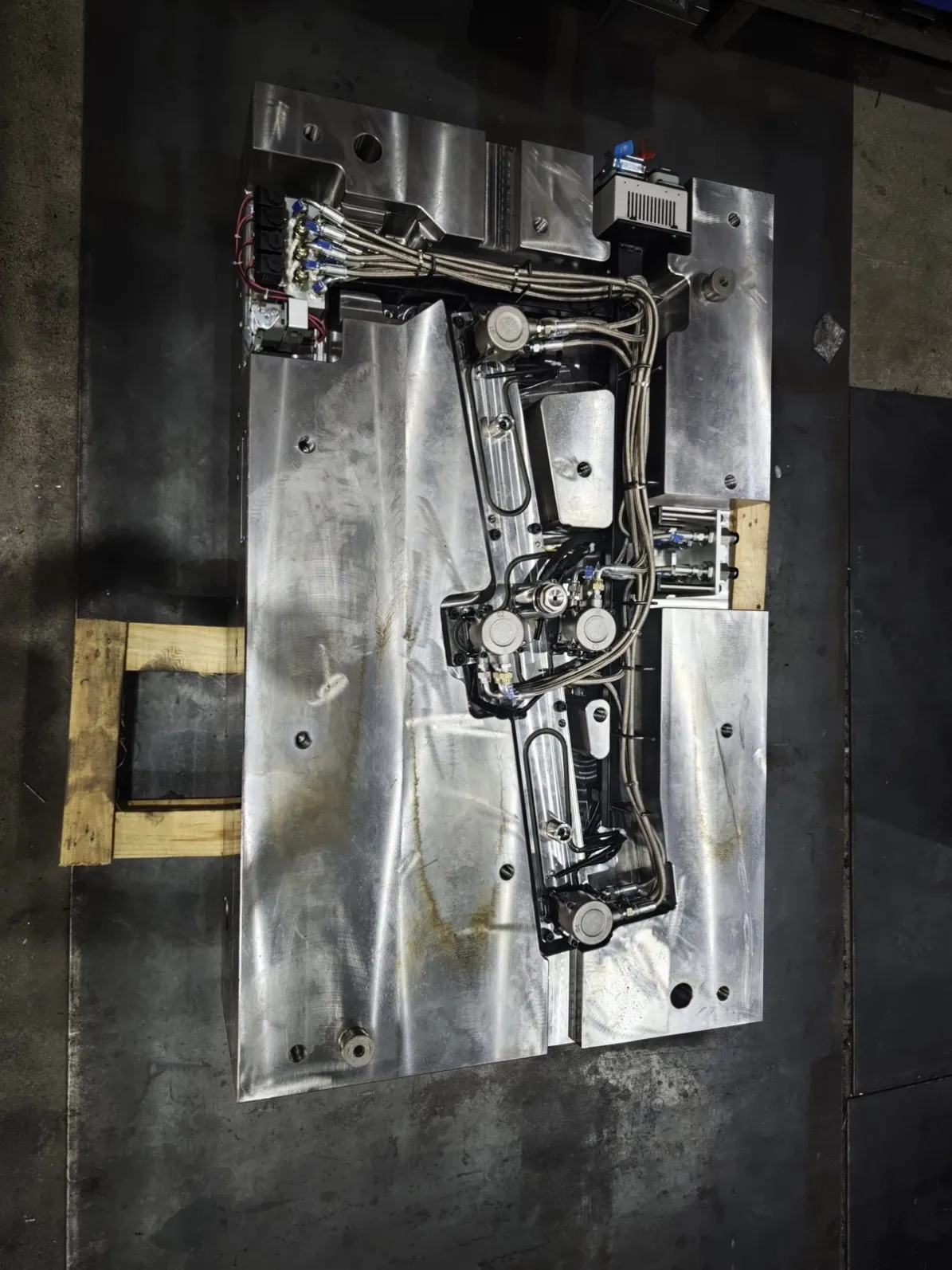
1. Send your drawing, sample, photo, or early CAD, plus the profile it must fit and the outdoor conditions it must survive. 2. Free initial DFM review: material direction, fit risks, wall and rib logic, gate and ejection feasibility — before any tooling commitment.
3. Tooling, T0/T1 trials, and production support, including small-batch trial orders. 4. NDA available when required.