Engineering Insights
Injection Molding Machine Compatibility: 6 Checks Before Tooling
Check the proposed injection molding machine against your mold, resin and production plan. Six checks help buyers question compatibility beyond tonnage.
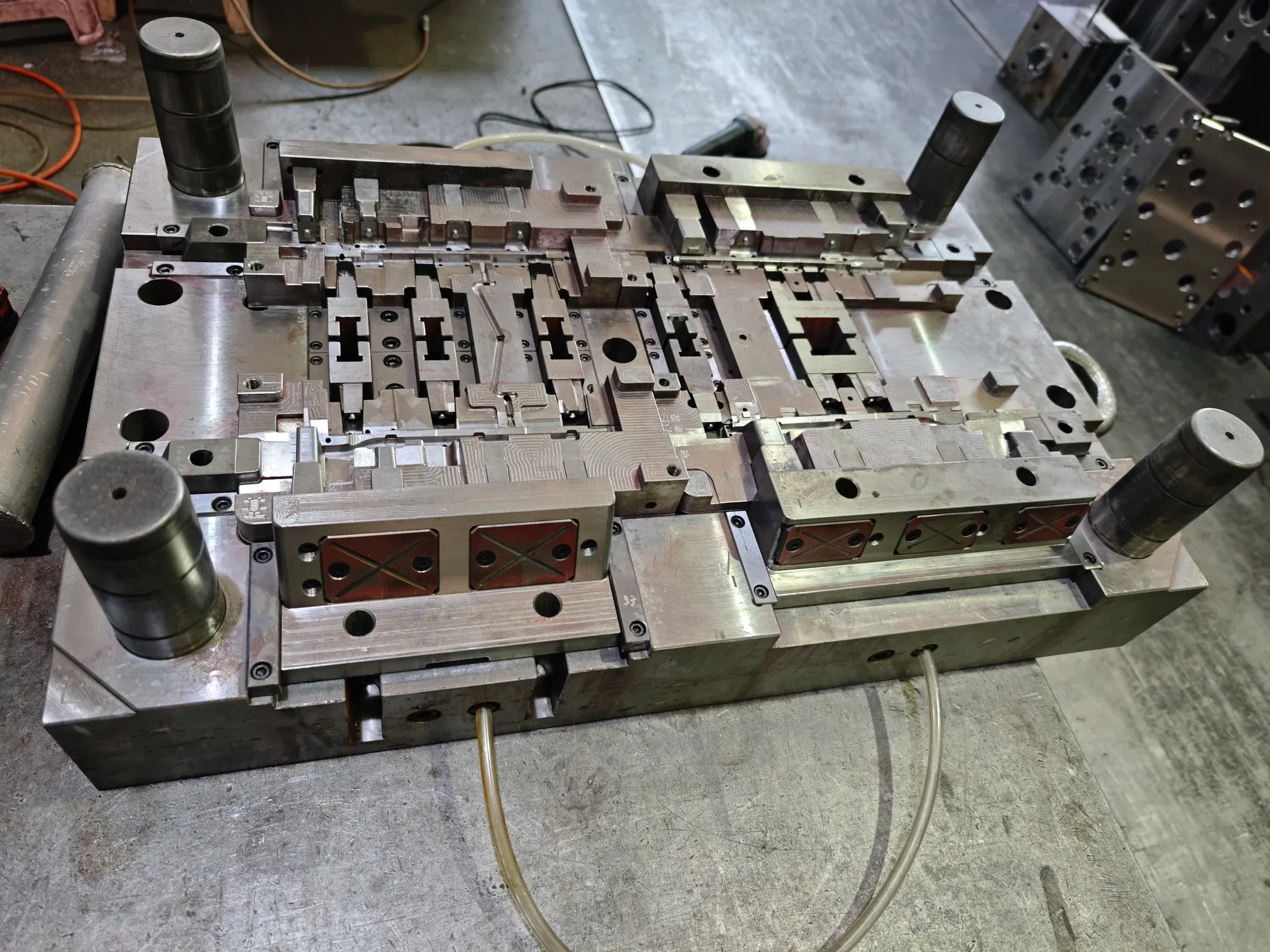
Your mold supplier has named a production press. Its tonnage sounds generous, but you still need to know whether your tool will install, fill and run as intended. Discovering a mismatch after the mold is built can leave your team discussing adapters, a different machine or another trial when you expected to approve samples.
Quick answer: check the exact machine configuration against the mold, resin and production requirements. Clamp force is one part of that review. Installation space, the fitted injection unit, filling performance, material preparation and operating interfaces need their own evidence. A larger tonnage number does not settle them.
These checks apply whether the supplier will produce your parts or ship the tool to a machine you specify. Neither situation automatically requires buying new equipment.
1. Ask what sets the clamp-force requirement
Ask the supplier to explain the projected area in the mold-opening direction, the cavities intended to run together and the pressure basis used for the estimate. The part's weight alone does not answer this question.
Autodesk's clamp-force guidance relates the calculation to pressure distributed across the projected cavity area. Filling and packing can produce different requirements. The press's maximum injection-pressure rating is not a substitute for that cavity-pressure assessment.
Request the assumptions and the responsible engineer's allowance for the tool and process. Avoid treating a generic tonnage multiplier or fixed safety percentage as approval. If the answer comes from simulation, identify the modeled configuration and limitations; a clamp-force plot is still only one part of machine compatibility.
2. Check installation and movement separately
First ask whether the mold can be installed and mounted. Then ask whether it can open, eject and release the part within the intended operating arrangement. These are separate questions.
Request a dimensioned comparison covering the mold envelope, mounting arrangement, permitted mold height and available opening space. Include the access needed for connections and handling. For a machine with tie bars, check their clearance; for a tie-bar-less machine, review its actual mold-space limits instead of applying the same rule.
Ask the tool designer and production site to show the opening, core-pull, ejection and takeout sequence where relevant. A drawing showing a closed mold between the platens does not explain that sequence. Record any interference or access question before the interface is frozen.
3. Identify the fitted injection unit and complete shot
Get the actual injection-unit and screw configuration, not only the press model. As an example of the distinctions to look for, ARBURG's technical data separately identifies screw options, stroke volume and PS-based shot weight.
Ask the processor to assess the complete shot for the intended active cavities and runner arrangement using the proposed resin. A PS-based catalogue weight cannot simply be read as the same usable weight of every other material. Have the processor explain the usable operating range and assumptions rather than selecting a universal utilization percentage from an online checklist.
If material, cavity operation or the runner changes, flag this assessment for review too.
4. Review filling pressure and flow together
“The shot fits” leaves another question: can the installed unit deliver it under the proposed filling conditions?
Ask for the pressure and volumetric flow needed, their units and the machine performance available under those conditions. Screw travel speed and volumetric injection flow describe different quantities. ARBURG's explanation of injection performance shows why a speed figure alone does not establish the required filling capability.
Check the equipment maker's conditions and footnotes. ARBURG's technical table also cautions that some maximum pressure and flow combinations are mutually exclusive. Do not assemble a proposed process by independently choosing the most favorable number in each catalogue row. Ask which combination is available on the fitted unit and what remains to be confirmed in trial.
5. Connect the material and recovery plan to the target cycle
Ask the processor to review the specified resin grade, fillers, color and permitted additives against the proposed screw/barrel arrangement and material supplier's processing guidance. A material-family name leaves too much unspecified for this discussion.
For the target cycle, ask what supports the proposed plasticizing and recovery time, and how material preparation and cooling will be provided. Identify the dryer, temperature-control or other peripheral requirements that actually apply to the grade and tool.
Keep this as a compatibility question, rather than accepting or rejecting a cycle-time promise from a brochure. Record whether the proposed condition is an estimate, an equipment capability assessment or a result demonstrated with your mold and material. Missing evidence should remain visible.
6. Close the interfaces between trial and production
Ask the receiving production site to confirm the relevant nozzle and locating interfaces, mounting and ejector connections, cooling connections, controls and required services. Where the design uses hot-runner heating, valve actuation, hydraulic cores or automated takeout, identify the equipment and signals needed to operate that specific arrangement.
Assign each open difference to an owner. State whether it needs an adapter, a tooling change, a different setup or further investigation, with approval before implementation. A general statement that the factory has suitable machines does not close an unidentified interface.
If trial and production use different presses, list their differences and agree what must be checked again. Record the actual trial machine and configuration with the results. Successful samples on that setup support those conditions; they do not automatically approve another machine. Include the unresolved items in the mold design-release discussion.
Send the supplier a question they can answer
Use a request tied to your proposed production arrangement:
Please identify the intended press, fitted injection unit and screw, and the part, resin and mold revisions used for your compatibility assessment. Explain the clamp-force basis, installation and movement checks, complete-shot assessment and filling-performance basis. List the required operating interfaces, any differences between trial and production, and the open items needing our decision. For each open item, state the responsible person and evidence needed before approval.
Review the answer with the tool designer and intended processor. Separate confirmed compatibility, a feasible option needing verification and an unresolved constraint. If production equipment is still undecided, define that uncertainty before releasing dimensions that depend on it.
Questions buyers ask about machine compatibility
Does a larger proposed press mean the supplier has oversized it?
Ask which requirement determines the proposed machine: clamp force, installation space, injection performance or another constraint. Request the basis and any feasible alternative. Tonnage alone cannot establish that the proposal is necessary or excessive, and it does not prove its operating cost.
Can two machines with the same tonnage be treated as interchangeable?
Only after the relevant configuration and interfaces have been checked. Ask what differs in installation space, the injection unit, movements, controls and services. Keep the comparison tied to your tool and material rather than treating the shared tonnage label as an equivalence certificate.
What if the production machine changes after design release?
Identify which released assumptions the change affects. Have the responsible engineers review those differences and agree any modifications and repeat verification before relying on the new setup. Keep the approval record connected to the machine actually used.
Discuss the machine constraint before it becomes a tooling change
Jeancen Mold supports mold engineering and early tooling-risk review. Through engineering and DFM review, discuss how the intended production arrangement affects the tool and what needs clarification with the processor.
Request a project review with a nonconfidential description of your part, material, project stage, production destination and main compatibility question. Agree confidentiality and a suitable sharing method before providing CAD, machine drawings or supplier documents you are authorized to share.