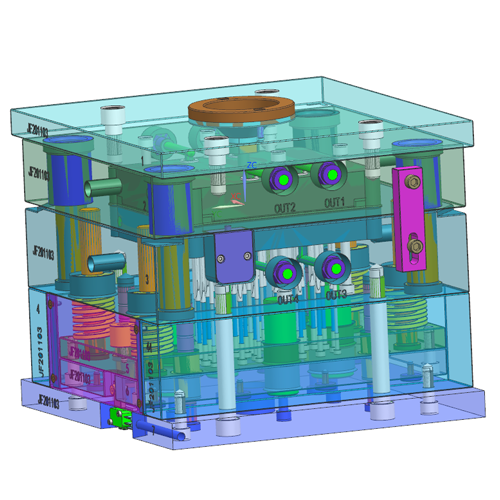
High-Precision Molds
Optical-Grade Molds | Clear PC/PMMA Light Pipe Tooling | Jeancen Mold
High-polish optical tooling for clear PC/PMMA parts—engineered to reduce stress, haze, burns, and dimensional drift.
High-polish optical tooling engineered for clarity, low stress, and dimensional stability.
Clear PC/PMMA components amplify hidden defects: stress marks, haze, burn lines, flow lines, and micro-scratches. Optical-grade tooling requires disciplined control of steel selection, venting, thermal balance, and finish management.
Best Fit Applications
- Automotive ambient lighting, light pipes, and optical guides
- Transparent lenses, covers, indicators, and light diffusers
- Parts where clarity and appearance are pass/fail requirements
Key Engineering Controls
1) Stress & Distortion Risk Control
- Gate and flow-path review to reduce stress concentration
- Cooling balance to minimize frozen-in stress and warpage
- Practical process window definition for stable output
2) Optical Surface Strategy (High-Polish Discipline)
- Finish targets by functional surface (not random polishing)
- Protection plan for optical zones to reduce rework risk
- Venting logic to prevent burn marks and the diesel effect
3) Dimensional Stability for Assembly
- CTQ-driven design review and measurement checkpoints
- Shut-off and guiding strategy to protect critical edges over time
What We Need to Quote Accurately
- 3D CAD (STEP) + CTQ list (datums, fits, optical zones)
- Resin grade (PC/PMMA), additives, and appearance requirement
- Target volume and lifecycle expectation
Next Step
Send your CAD and CTQ notes. We’ll respond with a focused DFM and a tooling strategy designed for stable clarity and repeatable dimensions.
- Email: info@jeancen.com
- Contact: Contact Us