Jul 23, 2026Sourcing Guide & Costs
What Is Really Included in an Injection Mold Quotation?
Two mold quotations for the same part can represent very different engineering scope and production risk. This guide explains what should be included — and what to check before comparing prices.
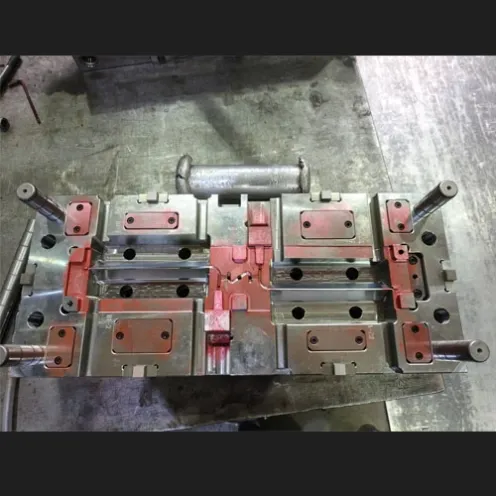
Why the lowest tooling price may not deliver the lowest total cost
When customers compare injection mold quotations, the first thing they usually notice is the total price. That is understandable. A mold is a significant upfront investment, and no company wants to pay more than necessary.
But two quotations for the same plastic part can look similar on the first page while representing very different tooling strategies, validation scopes, and production risks.
The real question is not only "How much does the mold cost?" It is also: "What has been included to help this mold run reliably after delivery?"
A lower quotation is not automatically a poor quotation. Sometimes a supplier has a more efficient machining plan, a simpler mold structure, or a better-fit solution for the required production volume. The risk appears when the quotation is lower because important engineering, tooling, or validation work has not been included clearly.
Why Mold Quotations Can Differ So Much
There is no fixed cost formula that applies to every injection mold. The final quotation depends on the product size, cavity number, annual volume, plastic material, cosmetic requirements, tolerances, undercuts, mold life target, hot-runner requirements, and validation scope.
A simple two-plate mold for a low-volume internal component is very different from a multi-cavity tool with sliders, lifters, tight assembly dimensions and Class-A surfaces.
For this reason, cost percentages such as "steel is always 25%" or "design is always 10%" are not very useful. The more useful approach is to understand what engineering and manufacturing work is included behind the price.
1. Engineering Review and Mold Concept
Before steel is cut, the supplier should first understand how the part will be molded and how it will be used. This normally includes reviewing wall-thickness distribution, draft angles, ribs and bosses, undercuts, gate restrictions, parting-line position, ejection risk, cooling difficulty, material shrinkage, assembly fit, cosmetic surfaces, and critical dimensions and tolerances.
Not every project requires a full Moldflow analysis. For a simple and familiar geometry, experienced engineering judgment may be sufficient. But when the product has long flow paths, thin walls, multiple cavities, glass-filled material, appearance requirements, or a high risk of warpage, simulation can provide valuable support before the tooling direction is finalized.
The important point is that the mold concept should be reviewed before manufacturing begins. A small CAD adjustment made before steel cutting is usually easier than welding, remachining, or rebuilding an insert after T0. Jeancen's DFM and T0 risk-control process therefore treats wall thickness, gating, cooling, ejection, fit, and mold-safe adjustment as early engineering decisions rather than late corrections.
2. Mold Steel and Component Strategy
Steel selection should be based on the complete project requirement, not only on the name of one steel grade. The supplier should consider plastic material and additives, glass-fiber content, corrosion risk, required polish or texture, expected production volume, moving components, heat-treatment requirements, and maintenance conditions.
The same principle applies to guide components, ejector pins, sleeves, springs, seals, and other standard parts. These components may look small compared with the complete mold, but their stability affects alignment, ejection, and production uptime.
For molds with wear-prone or damage-prone areas, replaceable inserts and a defined spare-parts strategy can reduce future repair time. Jeancen's technical service standard includes replaceable-component planning, spare parts for key standard and non-standard components, anti-misassembly features and safety monitoring where required.
A quotation should therefore explain not only which steel will be used, but also where it will be used, whether heat treatment is included, which standard-component brands or quality levels are specified, which wear parts are replaceable, and whether critical spare parts are included.
3. Machining, Fitting and Mold Assembly
Machining cost is strongly affected by the required accuracy and the complexity of the mold. Depending on the project, the mold may require CNC roughing and finishing, high-speed machining, EDM, slow wire-cut EDM, grinding, polishing, texture preparation, insert fitting, slider and lifter fitting, and dimensional inspection.
Two molds may use the same steel grade but still have very different long-term performance because of differences in machining accuracy, heat treatment, fitting quality, and steel support.
For example, a slider that looks acceptable in the CAD design may still require careful interlocking, wear surfaces, and support to remain stable during repeated production. Likewise, a complex rib area may be more reliable when designed as a modular insert rather than machined from one difficult block of steel.
The purpose of good mold design is not only to make the mold possible to build. It should also make the mold easier to manufacture, fit, maintain, and repair.
4. Cooling, Venting, Gating and Ejection
These systems are often less visible in a quotation than the mold steel, but they strongly affect production performance.
Cooling
Cooling should be designed according to the actual plastic and steel distribution. A simple waterline layout may be sufficient for some parts. For housings with thick sections, deep ribs, bosses, or local heat concentration, the mold may require multiple cooling circuits, local cooling inserts, or a more detailed thermal review. If cooling is not balanced, the customer may later face longer cycle time, warpage, dimensional drift, a narrow process window, and repeated parameter adjustment. Cooling design is one of the four areas Jeancen identifies as unsuitable for blind cost cutting because its effect continues through every production cycle.
Venting
Air inside the cavity needs a physical path to escape. Injection pressure cannot replace a proper vent. Deep ribs, enclosed corners and end-of-fill areas may require local venting, vented inserts or a different insert strategy. Without this, the operator may be forced to choose between short shots and burn marks.
Gating
The gate determines the filling path, pressure distribution, weld-line position and gate vestige. A gate that fills the part once is not automatically the best solution for stable production. The gate type and position should be reviewed together with appearance requirements, wall thickness, material and part geometry.
Ejection
A part can be filled correctly and still be damaged or deformed during ejection. The supplier should review ejector positions, contact area, draft, lifter movement and local part stiffness. Balanced ejection is especially important for deep ribs, thin walls, soft materials and appearance-sensitive components.
5. Mold Trials, Measurement and Validation
T0 is the first time the product design, mold steel, material, and molding process meet in reality. A few acceptable samples prove that the mold can produce the part. They do not automatically prove that the mold can repeat the result during continuous production.
A responsible trial and validation plan should define what will be checked at each stage. This may include filling and venting, flash and gate vestige, ejection, appearance, critical dimensions, assembly fit, cooling stability, continuous-run consistency, corrective actions, and T1 or T2 verification.
The goal is not to push the machine to extreme settings until several good samples are produced. The goal is to confirm a reasonable and repeatable process window. If acceptable parts can only be produced with unusually high pressure, excessive temperature, long cooling time, or manual trimming, the underlying tooling or product design should be reviewed.
Jeancen's NPI workflow separates T0, measurement, corrective actions, T1/T2 verification, and customer approval before moving into pilot production and ongoing support.
6. Inspection, Documentation and Post-Delivery Support
The quotation should also clarify what the customer will receive beyond the physical mold. Depending on the project, this may include a DFM report, mold design review, trial report, dimensional report, material certificates, steel certificates, mold drawings, spare-parts list, maintenance instructions, sample approval records, and mold trial history.
Post-delivery support should also be defined clearly. Important questions include: What is included in the warranty? Which changes are considered supplier responsibility? Which changes are caused by customer design revisions? Are spare parts included? What support is available after the mold is transferred? What maintenance schedule is recommended?
A low quotation may still be suitable, but these boundaries should be clear before the project begins.
What May Be Missing From a Lower Quotation?
A lower price does not necessarily mean that the supplier is using poor materials or reducing quality. But the customer should confirm whether the quotation includes the same scope.
Common differences may include:
- Limited DFM review
- No simulation where simulation is needed
- Different steel or heat-treatment plans
- Lower-grade standard components
- Simpler cooling layout
- Fewer trial rounds
- Limited measurement
- No spare parts
- No mold drawings
- Unclear modification responsibility
- Limited post-delivery support
The purpose of asking these questions is not to reject the lowest quotation. It is to make sure all quotations are being compared on the same basis.
Four Areas Where Cost Cutting Can Create Long-Term Risk
In most projects, four areas deserve particular attention.
Mold Steel and Wear Components
The steel and component strategy should match the resin, production volume and cosmetic requirement. Abrasive or corrosive materials need a different approach from standard ABS or PP.
Cooling Design
Cooling affects cycle time, warpage, dimensional stability and process-window width. A saving made in the cooling design may be paid back repeatedly during every production run.
Standard Components and Ejection
Reliable guiding and ejection components reduce the risk of misalignment, pin damage and repeated maintenance.
Mold Trials and Inspection
Problems found before approval are usually easier to correct than problems found during mass production.
These four areas are also the core of Jeancen's tooling-risk checklist: steel strategy, standard components, cooling and trial validation.
Where Tooling Cost Can Be Reduced Safely
Controlling cost does not mean selecting the highest specification for every mold. The correct approach is to match the solution to the actual requirement.
Safe cost optimization may include:
- Simplifying non-critical product features
- Removing unnecessary undercuts
- Using a simpler gate where appearance allows
- Selecting the right cavity count for the annual volume
- Using modular inserts only where they improve maintenance or adjustment
- Choosing an economic steel strategy for low-volume production
- Avoiding unnecessary cosmetic treatment on hidden surfaces
- Defining acceptance criteria before design changes begin
The objective is not to overengineer every mold. It is to avoid saving money in areas that later create scrap, downtime, maintenance, or unstable production.
Questions to Ask Before Comparing Mold Quotations
Before choosing a tooling supplier, consider asking:
- What DFM review is included before mold design begins?
- Which steel grades are used for the cavity, core, inserts, and mold base?
- Is heat treatment included?
- Which standard-component brands or quality levels are specified?
- How is the cooling system designed and reviewed?
- What gate and ejection strategy is proposed?
- How many trial stages are included?
- What measurement and validation reports will be provided?
- Which spare parts are included?
- How are design changes and tooling corrections handled?
- What post-delivery technical support is available?
- What production volume and mold-life target has the quotation been designed for?
These questions make it easier to compare engineering scope instead of comparing only the final number.
Final Thought
The lowest tooling price can be the right choice when the project requirement is simple, and the quotation scope is complete. But it should not be selected only because it is the lowest number on the page.
A good mold quotation should show how the supplier plans to manage manufacturability, mold life, cooling, venting, ejection, trial validation, maintenance, and production stability.
The true cost of a mold is not only the price paid before the project begins. It also includes the cost of scrap, cycle time, repairs, downtime, engineering changes, and delayed production after the mold enters service.
So when comparing quotations, do not only ask "Which mold is cheaper?" Also ask: "Which quotation gives this project the right level of engineering and the lowest reasonable total cost?"
Related Pages
Need Help Reviewing a Mold Quotation or Tooling Strategy?
If you are comparing mold quotations and want to understand whether the engineering scope, steel strategy, cooling design, and trial plan are aligned with your production requirements, our team can help review the key differences before you commit.
Share your part files, quotation details, and project requirements. We can help evaluate whether the proposed tooling solution matches your quality, volume and long-term production goals.