Sourcing Guide & Costs
Injection Mold Cost Reduction: Review the Trade-offs
Review lower-cost mold configurations against agreed requirements. Define the change, evidence and approval needed before accepting a technical substitution.
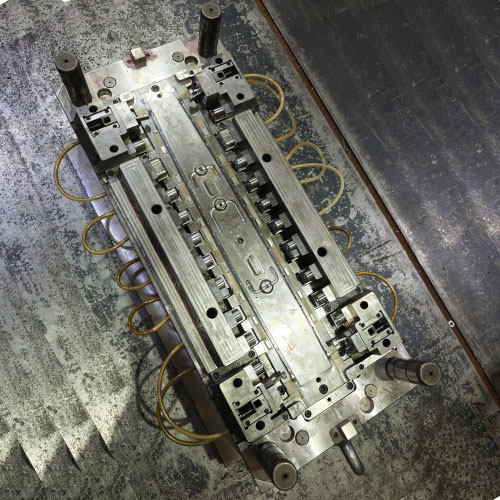
A lower budget does not authorize a hidden specification change
You receive a revised mold quotation with a lower price, but the proposed technical substitution is not fully explained. Before accepting it, compare the new configuration with the agreed requirements. Identify what changes, why it may still be suitable and what evidence is needed. Cost reduction can be reasonable; silently removing an agreed function or acceptance condition is a different decision.
The consequence may not be obvious from the quotation. A substitution can change a service interface, maintenance task or validation gap while leaving the part drawing untouched. Conversely, a simpler configuration may meet a limited program's needs without unnecessary complexity. Neither the lower price nor the original higher specification settles the question.
Separate reduced requirements from an alternative way to meet them
Start with the controlled specification: critical functions, appearance, intended use and life target, operating constraints and acceptance conditions. Ask whether the proposal removes a nonessential requirement, changes the manufacturing approach while retaining the requirement, or omits previously included work. These paths need different approval and verification.
Make the substitution explicit in a short change record: original configuration, proposed configuration, affected requirement, reason, expected cost change, unknowns, verification method and responsible approver. A projected saving does not prove technical equivalence. Keep the record tied to the relevant revision so that a commercial agreement does not accidentally become an undocumented engineering change.
Test the proposed replacement against its actual job
With the change defined, ask the responsible engineer to explain its technical basis. The useful question is not whether a category is always worth spending more on. It is whether this alternative meets this project's requirement under the conditions in which the mold will be built, operated and maintained.
Steel, heat treatment and surface route
Do not treat similar names or the same quoted hardness as proof of interchangeability. Discuss the exact resin and fillers, wear or corrosion conditions, required surface, expected use and maintenance. Manufacturing and heat-treatment considerations also matter. Where necessary, involve the steel supplier in explaining the proposed route; a more expensive grade is not automatically the better fit.
Guiding, moving and ejection components
For a component substitution, review its interfaces, movement or load requirements, fit and working environment. Identify the actual specification, local replacement availability and who will supply or fit a replacement. A familiar brand can help identify a part, but brand alone does not demonstrate suitability or establish the maintenance arrangement.
Cooling arrangement and available utilities
Review a simplified cooling proposal against the thermal-control requirement and the intended site's machine, temperature-control equipment, connections and maintenance access. Fewer circuits are not automatically wrong, and a more elaborate layout is not automatically useful. Ask how the chosen arrangement will be assessed under the agreed molding and acceptance conditions, including access for cleaning or service.
Trial and inspection scope
Validation can be proportionate to the project, but reducing it should leave a visible list of what will remain unverified. Agree the material, equipment, sample conditions and relevant dimensional, cosmetic or functional checks, along with production-condition responsibilities. Trial labels such as T0 or T1 do not establish a universal quality standard or guarantee approval after a fixed number of attempts.
Choose an outcome that matches the evidence
State exactly what approval authorizes: further evaluation, mold manufacture or production acceptance. The responsible parties should have sufficient evidence for that stage and record any remaining verification and its owner. Approval to investigate or manufacture is not acceptance of unverified production performance. If essential evidence for the proposed commitment is missing, seek clarification or a defined assessment first. If the alternative cannot meet a critical requirement, reject it or obtain an expressly approved change to that requirement rather than treating it as a silent exception.
A low-volume or limited-use program may justify a simpler solution when its conditions are explicit. That does not permit applicable safety or regulatory requirements to be ignored. Where a critical gap remains, an informal decision to try it and see should not replace the necessary engineering decision and acceptance responsibility.
Look for unnecessary requirements before weakening critical ones
If the substitution does not work, return to the product requirements. A permitted simplification of noncritical geometry, an unnecessary cosmetic treatment or an avoidable function may offer another route. Review what the change would affect and obtain the requirement owner's approval. A mold supplier should not alter the product's agreed function or appearance merely to reach a price target.
Questions before approving a lower-cost option
What if the supplier says the replacement is equivalent?
Ask equivalent for which requirement and under which conditions. Request the relevant specification, rationale or planned verification, rather than relying on the word alone. If the evidence supports only part of the requirement, identify the remaining gap before approval.
Can we reduce the trial scope to meet the budget?
Discuss a proportionate plan, but state which claims the reduced work can support and which risks remain. The team must agree who will verify the open items and when. Less testing does not make an unverified requirement disappear.
Bring a specific substitution to the project discussion
Use the page's Request a Project Review contact option to explain the controlled specification, budget objective and particular configuration change you are considering to Jeancen. Identify the critical requirements and production constraints. Agree an appropriate sharing scope before sending confidential information, then focus the discussion on the affected requirements, evidence still needed and the scope of the next assessment.