Jul 30, 2026Engineering Insights
Why Beryllium Copper Inserts Are Used for Heat Dissipation in Injection Molds
Why Beryllium Copper Inserts Are Used for Heat Dissipation in Injection Molds In precision injection molding, thermal management is often the difference between a stable production mold and a mold tha
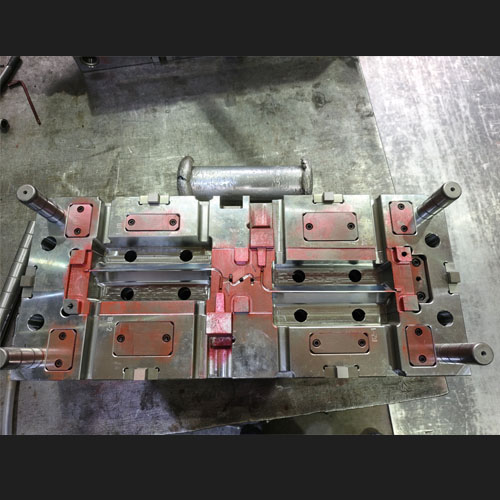
In precision injection molding, thermal management is often the difference between a stable production mold and a mold that creates ongoing quality and cycle time problems.
As molded parts become more complex, heat becomes harder to control. Deep cavities, thin walls, thick ribs, dense internal structures, and restricted cooling channel space can all create local hot spots inside the mold. When these hot spots are not managed properly, the result may be warpage, burn marks, sink marks, unstable dimensions, longer cycle times, or repeated mold maintenance.
In these situations, standard mold steel is not always enough.
One effective engineering solution is the use of beryllium copper (BeCu) inserts in selected local areas where conventional cooling cannot work efficiently.
At Jeancen Mold, BeCu is not treated as a default material. It is used as a targeted engineering solution when a specific area of the mold needs faster heat transfer, better thermal balance, or improved stability in moving components.
This article explains why beryllium copper inserts are used in injection molds, where they are most helpful, and what buyers and engineers should consider before applying them.
Why Heat Dissipation Matters in Injection Molds
Every injection mold must do more than form the part. It must also remove heat efficiently and consistently.
If heat is not removed in a balanced way, the mold may produce a part that looks acceptable in one shot and unstable in the next. This is especially common in parts with uneven wall thickness, deep ribs, narrow spaces, cosmetic surfaces, or precision fit requirements.
Poor thermal control can lead to:
- Warpage
- Burn marks
- Sink marks
- Dimensional instability
- Long cycle times
- Narrow process windows
- Unstable repeatability
- Higher scrap rates
- Longer mold open time
- Extra maintenance pressure
For many projects, cooling is not just a productivity issue. It is a part quality issue.
This is why thermal management should be reviewed during the DFM and mold design stage, not after the mold is already built.
What Makes Beryllium Copper Different?
Beryllium copper is widely used in selected mold areas because it offers much higher thermal conductivity than standard mold steels.
In practical terms, this means it can transfer heat away from difficult areas much faster.
Standard steel remains the main structural material for most molds. But when a specific local area cannot be cooled well through conventional drilled water channels, BeCu can be used as a local insert material to improve heat removal.
This makes it especially valuable in:
- Thick-to-thin transition zones
- Deep rib areas
- Blind pockets
- Core tips
- Narrow cavity sections
- Thin-wall precision parts
- Cosmetic areas affected by heat accumulation
- Moving components with local friction heat
The purpose is not to replace steel everywhere. The purpose is to solve the right problem in the right place.
1. BeCu Helps Remove Heat from Areas That Standard Cooling Cannot Reach
The first major advantage of beryllium copper is its heat dissipation performance.
In many precision molds, cooling lines cannot be placed close enough to the actual heat accumulation zone. Geometry limitations, part shape, ejector layout, inserts, sliders, or structural restrictions may leave some areas thermally isolated.
These isolated areas become hot spots.
Once that happens, the mold may show:
- Uneven cooling
- Local shrinkage differences
- Sink or warp risk
- Surface burning
- Longer required cooling time
- Reduced production efficiency
In these cases, BeCu inserts help transfer heat away from the local hot zone faster than standard steel can.
This is especially useful in parts that contain both very thin walls and locally thicker rib or support sections.
Example: POS Terminal Housing with Thin Walls and Thick Ribs
One example is a POS terminal housing project.
The part included a very thin wall section of approximately 0.62 mm, while also containing thicker internal rib features. This created a classic thermal imbalance.
If the mold had relied only on conventional all-steel cooling, some rib areas would have retained more heat because cooling channels could not be routed close enough to the thermal center of those features.
That would have increased the risk of:
- Local warpage
- Burn marks
- Dimensional instability
- Longer cycle times caused by slow cooling
During the DFM and mold design stage, Jeancen reviewed the thermal risk and proposed using BeCu inserts in selected heat accumulation zones.
The goal was simple: improve local heat removal before the mold was built, rather than trying to compensate later through process settings alone.
This is a good example of proactive engineering. Many mold problems are easier to prevent during design than to correct after trial.
2. BeCu Can Help Stabilize Cycle Time
Cycle time is one of the most important cost drivers in injection molding.
Even a small reduction in cooling-related delay can create a meaningful cost impact over the life of a production tool.
When a mold contains one or two hot spots, the entire molding cycle is often forced to wait for those slow-cooling areas. The rest of the part may already be ready, but the cycle still cannot proceed because one zone remains too hot.
This is why a localized cooling problem can affect total machine efficiency.
By improving heat transfer in selected areas, BeCu inserts can help:
- Reduce local heat accumulation
- Improve cooling balance
- Support more stable cycle time
- Reduce the need to overcool the entire mold
- Improve consistency across repeated cycles
The exact cycle time improvement depends on the part geometry, resin, mold design, and process conditions. It should not be treated as a fixed universal number.
However, in many projects, the value of BeCu is not only in faster cooling. It is also in making the cooling result more predictable.
For long-running molds, that predictability matters.
3. BeCu Can Be Useful in Moving Mold Components
Many people think about BeCu only as a cooling material, but it can also be useful in selected moving areas of the mold.
In high-volume precision tooling, components such as sliders, lifters, and wear interfaces may generate local friction heat during repeated operation. If heat accumulates and expansion is not controlled properly, moving parts may become less stable over time.
This can contribute to:
- Increased wear
- Galling
- Seizing risk
- Unstable sliding movement
- Maintenance downtime
- Reduced mold reliability
In one automotive rear fog lamp housing project, Jeancen reviewed undercut-related moving areas where lifters and sliders were subject to repeated friction and thermal load.
In selected critical contact zones, the engineering solution included BeCu-related wear or transfer components to help improve thermal behavior and reduce the risk of heat-related instability.
The goal was not simply to change material for the sake of change. It was to support stable long-term mold performance under repeated production conditions.
For complex automotive and precision molds, this kind of local material decision can make a significant difference over time.
4. BeCu Should Be Evaluated from a Total Cost of Ownership Perspective
A common objection to beryllium copper is cost.
It is true that BeCu is more expensive than many standard mold steels, and it also requires more careful machining and handling practices.
However, evaluating BeCu only by material price is often the wrong approach.
The correct evaluation is based on total cost of ownership (TCO).
If a BeCu insert helps reduce cycle time, improve yield, reduce maintenance frequency, or prevent repeated quality problems, the long-term financial benefit may be much greater than the added insert cost.
Buyers should evaluate BeCu by asking:
- Does it solve a real hot spot problem?
- Can it reduce cycle time pressure?
- Can it improve part stability or flatness?
- Can it reduce burn or warp risk?
- Can it help avoid repeated trial modifications?
- Can it improve mold reliability in moving areas?
- Can it reduce maintenance downtime?
If the answer is yes, then the higher insert cost may be justified.
In other words, BeCu should not be judged as an expensive metal. It should be judged as an engineering tool used to remove a known bottleneck.
Where BeCu Inserts Are Most Commonly Used
BeCu inserts are often considered in these types of mold situations:
Thin-wall parts with local thick sections
These parts often show strong cooling imbalance and need local heat extraction support.
Deep ribs and blind pockets
When cooling lines cannot approach the actual heat center, BeCu inserts can help transfer heat more efficiently.
Cosmetic or dimensional-critical areas
Heat accumulation in these areas may create visible or measurable defects that are difficult to accept.
Small core tips or narrow core features
These regions may be difficult to cool conventionally and may benefit from high thermal conductivity material.
Sliders, lifters, and friction-sensitive moving zones
In selected applications, BeCu-based components can help manage local heat and stability.
High-volume precision molds
When the mold will run for a large number of cycles, even a small thermal improvement may create significant production benefit over time.
Important Design Considerations Before Using BeCu
Beryllium copper is useful, but it should not be used casually.
It requires experience in both design and manufacturing.
1. Thermal Expansion Must Be Considered
BeCu has a different thermal expansion behavior compared with standard mold steel.
If insert fit, clearance, or surrounding structure is not designed correctly, the insert may create fit or movement issues after the mold heats up.
This is why local insert design needs to consider real operating temperature, not only room-temperature assembly.
2. BeCu Does Not Replace Good Mold Design
BeCu can improve local thermal performance, but it cannot solve every mold problem by itself.
If the gate location is poor, the wall thickness is unbalanced, venting is weak, or cooling layout is fundamentally flawed, simply adding BeCu will not fully fix the project.
The best results happen when BeCu is part of a complete engineering solution that includes:
- DFM review
- Thermal risk identification
- Cooling strategy
- Gate review
- Ejection logic
- Insert layout
- Mold maintenance planning
3. Machining and Safety Practices Matter
Beryllium copper must be machined with proper process control and safety procedures.
This includes appropriate dust control, machining practice, and handling standards where applicable.
For buyers, this means the supplier’s capability matters. The material is only useful if the toolmaker has the engineering and manufacturing discipline to apply it correctly.
Common Misunderstandings About Beryllium Copper
“BeCu is too expensive.”
It can be more expensive as a material, but that does not mean it is too expensive as a solution. The correct comparison is against the cost of longer cycle time, unstable quality, and repeated mold maintenance.
“BeCu should be used everywhere.”
No. It is usually best used selectively in critical local areas. Most molds still rely on steel as the primary structural material.
“BeCu alone will fix warpage.”
Not necessarily. Warpage is influenced by part design, wall thickness, gate location, cooling balance, resin behavior, and processing conditions. BeCu may help in some cases, but it is not a standalone fix.
“If the mold runs, BeCu is unnecessary.”
A mold that runs is not always a mold that runs efficiently, consistently, or economically. BeCu may still be valuable when there is hidden cycle time or stability loss.
When Buyers Should Consider Asking About BeCu
If you are sourcing a precision mold, BeCu may be worth discussing when:
- The part has deep ribs or hot spots
- Thin-wall and thick-wall sections coexist
- The project has strict flatness or dimensional stability requirements
- The part is cosmetic or appearance-sensitive
- The mold has difficult cooling access
- Cycle time is a major cost driver
- The tool is expected to run at high volume
- Sliders or lifters are working in high-friction or heat-sensitive conditions
These are the situations where a strategic insert material decision can have a meaningful effect on mold performance.
Final Thoughts
Beryllium copper is not a universal answer, but in the right locations it can be one of the most effective tools for improving thermal control in a precision injection mold.
Its value comes from targeted use.
When applied correctly, BeCu inserts can help:
- Improve local heat dissipation
- Reduce hot spots
- Support more stable cycle time
- Improve part consistency
- Reduce the risk of thermal imbalance
- Improve long-term mold reliability in selected critical areas
At Jeancen Mold, we do not recommend BeCu because it sounds advanced. We recommend it when the DFM and mold design review show a real thermal or structural reason to use it.
That is how mold engineering should work: identify the real bottleneck, then solve it with the right design and material decision before steel is cut.
Need Help Reviewing a Mold Cooling or Hot Spot Problem?
If your project is facing cycle time pressure, warpage risk, local overheating, or difficult cooling access, Jeancen Mold can help review the mold design logic before tooling begins.
We support:
- Mold design and manufacturing
- DFM review
- Material selection
- Cooling and gate strategy review
- Tooling validation
- Prototype-to-production support
If you already have a 3D file, drawing, or existing tooling concern, send your project information to:
info@jeancen.com
Jeancen Mold helps buyers reduce tooling uncertainty before steel is cut — through practical DFM review, precision tooling logic, and production-focused engineering support.