Jul 30, 2026Engineering Insights
6 Factors That Determine Injection Mold Quality
6 Factors That Determine Injection Mold Quality When sourcing a new mold, many teams focus first on purchase price and lead time. But once production begins, what matters more is whether the mold can
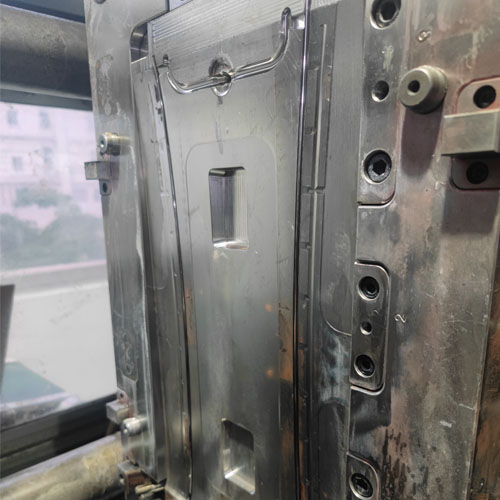
When sourcing a new mold, many teams focus first on purchase price and lead time.
But once production begins, what matters more is whether the mold can deliver stable dimensions, consistent appearance, predictable cycle time, and reasonable maintenance cost over its service life.
At Jeancen Mold, we evaluate mold quality as a full engineering system — not just a machining result. In practice, long-term tooling performance usually depends on six connected factors: design, steel selection, machining precision, assembly and trial, cooling performance, and maintenance logic.
This guide explains those six factors and how product teams can use them to evaluate mold quality before problems appear in production.
Why Injection Mold Quality Matters
A mold may look acceptable at the approval stage, yet still create downstream problems such as warpage, flash, unstable dimensions, burn marks, cosmetic defects, and repeated maintenance.
That is why mold quality should be evaluated as a production-risk issue, not just as a tooling purchase. In many NPI programs, early engineering decisions shape most of the downstream cost, schedule risk, and process stability.
Factor 1: Mold Design and DFM
Mold design is the foundation of tooling quality.
Problems in design are rarely truly fixed later. More often, they are managed at a higher cost through rework, process compromise, or shortened mold life. That is why DFM analysis before steel cutting is one of the most important steps in a tooling project.
What Good Design Should Address
Cavity and core structure
The cavity and core must be accurate, manufacturable, stable under production conditions, and suitable for reliable ejection.
Draft angle strategy
Draft should be checked not only on obvious vertical faces, but also on transitions, textured surfaces, curved faces, and split areas.
Gate location and runner balance
Gate position affects filling balance, weld line location, witness marks, shear behavior, and downstream appearance quality.
Cooling layout
Cooling design influences both cycle time and warpage risk. It should be considered as part of the mold design, not treated as a later adjustment.
Venting and ejection
Air traps, burn marks, and poor release behavior often begin as design issues.
Project Example
For high-appearance parts, the gate and venting strategy directly affect the final quality. Hidden submarine gating can help avoid visible gate marks, while targeted venting is often needed for deep rib structures and complex cosmetic parts.
Factor 2: Steel Selection and Material Strategy
Steel choice affects more than mold life. It also affects polish retention, wear resistance, corrosion behavior, maintenance frequency, and dimensional stability over time.
For standard engineering plastics and moderate-volume programs, pre-hardened steels such as P20 or 718 are often practical choices. For high-gloss, transparent, optical, or more corrosion-sensitive applications, steels such as S136, NAK80, or corrosion-resistant stainless grades may be more appropriate depending on resin type, cosmetic requirement, and expected production life.
What to Evaluate
- Whether steel is selected based on resin and part requirement, not only the quote level
- Whether heat treatment and hardness control are appropriate for the application
- Whether high-wear or corrosion-prone areas use more suitable material strategies
- Whether the mold base and structural components provide adequate rigidity
Why This Matters
A mold can be well designed but still lose performance early if steel or heat treatment is not matched to the actual production conditions.
Factor 3: Machining Precision and Process Control
Even a sound design can fail in practice if machining accuracy and process sequencing are not controlled.
Precision mold making depends not only on equipment, but also on whether the sequence of rough machining, heat treatment, finish machining, EDM, wire-cut work, fitting, and polishing is arranged correctly.
What to Evaluate
- CNC capability for complex 3D surfaces
- EDM and slow wire-cut EDM for critical details and insert interfaces
- Process control before polishing and fitting
- Measurement and inspection methods for critical geometry
Project Example
In an automotive light guide case, a curved optical insert can be processed with high-speed CNC and then finished with slow wire-cut EDM on the final insert profile to improve interface precision and reduce flash risk on a transparent appearance part.
Verification Capability
Critical components should be verified with appropriate inspection methods before assembly, especially for optical, cosmetic, or close-fit geometry.
Factor 4: Assembly, Fitting, and Mold Trial
Assembly is where precision components become a working system. Mold trial is where design, steel, machining, and assembly are tested together under actual molding conditions.
This stage should not be treated as a formality. A structured T0 process helps confirm whether the mold is ready for stable production, or whether early issues are still present in filling, venting, ejection, alignment, or dimensional behavior.
What to Evaluate
- Alignment and fit of cavity, core, sliders, and guiding components
- Ejection balance and repeatability
- Cooling circuit verification before trial
- Structured recording of molding window after the first trial
Practical Point
Mold trial should be used to optimize process behavior, not to discover avoidable mechanical mistakes.
Factor 5: Cooling System Performance
Cooling is one of the most important factors in injection mold performance.
It affects cycle time, but more importantly, it affects shrinkage balance, dimensional repeatability, warpage tendency, and process consistency.
What Good Cooling Should Achieve
- Uniform heat removal across the part geometry
- Better control of hot spots and differential shrinkage
- Stable production without excessive cycle inflation
- Maintainable circuits over the mold’s service life
Project Example
For complex parts, BeCu inserts and multi-circuit cooling strategies can be used in difficult heat zones to improve warpage control and production consistency.
Operational Risk
Cooling systems can gradually lose performance through scale, corrosion, leakage, or poor maintenance access. That is why verification before T0 and maintenance access in design both matter.
Factor 6: Long-Term Maintenance Engineering
Injection mold quality is not only what is delivered at shipment. It is also what can be maintained over the full production life of the tool.
What to Evaluate
- Whether high-wear zones are designed as replaceable inserts
- Whether spare parts and service points are clearly identified
- Whether cleaning, lubrication, and inspection access are practical
- Whether maintenance intervals and service logic are defined
Why This Matters
A mold that is hard to maintain usually becomes harder to trust in production. Small issues such as blocked vents, cooling degradation, sliding wear, or poor lubrication can turn into quality loss and unplanned downtime if maintenance logic is weak from the beginning.
How to Evaluate a Mold Supplier on All Six Factors
When comparing mold suppliers, ask questions that go beyond quote and lead time.
Design
- Do they provide proactive DFM analysis before steel cut?
- Can they explain the gating, cooling, venting, and ejection strategy clearly?
- Do they use Moldflow where risk justifies it?
Steel and Materials
- Can they explain why a specific steel grade is recommended for your resin and volume?
- Do they define heat-treatment logic and traceability?
Machining
- What machining and inspection capability do they have for critical geometry?
- How do they handle optical, flash-sensitive, or cosmetic interfaces?
Assembly and Trial
- Do they have a structured T0 process?
- What data or reports do they provide after the trial?
Cooling
- How do they verify the cooling circuit condition before the trial?
- How do they address hot spots in complex geometry?
Maintenance
- Are replaceable inserts, spare parts, and service logic included?
- Is long-term mold maintenance considered at the design stage?
FAQ
What are the most important factors affecting injection mold quality?
The six most important factors are mold design, steel selection, machining precision, assembly and trial quality, cooling system performance, and long-term maintenance.
Why is DFM important before the steel cut?
Because many tooling risks are cheaper and easier to correct before machining starts. DFM helps identify issues related to wall thickness, venting, ejection, cooling, warpage risk, and manufacturability early in the project.
How does steel selection affect mold life?
Steel selection influences wear resistance, corrosion resistance, polish retention, and dimensional stability. The right steel depends on resin type, part requirement, and expected production volume.
How does cooling affect injection mold quality?
Cooling affects shrinkage behavior, cycle time, warpage tendency, and dimensional repeatability. Poor cooling can make a mold harder to run consistently, even when the rest of the mold is well built.
What should I ask before choosing a mold supplier?
Ask about DFM, steel strategy, machining capability, inspection method, T0 process, cooling verification, and maintenance planning — not just quote and delivery time.
Final Thought
A mold is not reliable because one area is strong. It becomes reliable when design, steel, machining, assembly, cooling, and maintenance are aligned.
That is why the best tooling decisions are usually made early — before steel is cut, and before production risk becomes expensive.
If your team is evaluating a new tooling project and wants a more engineering-based review of mold quality risk, Jeancen Mold is happy to discuss it.