Sourcing Guide & Costs
Injection Mold TCO: Compare Cost per Accepted Part
Compare tooling proposals using the same production scope, accepted-part output and traceable cost assumptions. Keep unknowns visible and avoid double counting.
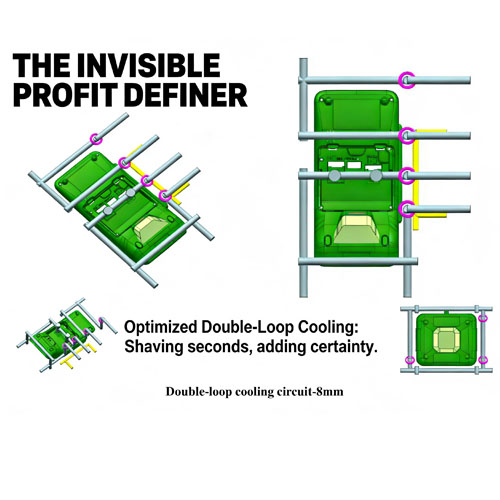
A lower mold quotation is not automatically a bad choice, and a higher price is not proof of reliability. To compare injection mold total cost of ownership, first define the same production scope, then relate the costs within that scope to the accepted parts you can actually use. Keep supplier targets separate from demonstrated results.
The purpose is not to turn every uncertainty into an impressive savings forecast. It is to identify which differences in tooling, production and responsibilities affect the buying decision, what evidence supports them and what still needs clarification.
Set the production boundary before comparing totals
Agree the part revision, resin and quality requirements, demand and comparison period, intended machine assumptions and delivery expectations. Tooling for a limited program may reasonably differ from tooling for sustained production. A proposal with unused capacity or a different validation scope is not directly comparable just because its headline price is lower.
Clarify whether you are comparing tool purchase, in-house production or a supplier's delivered molded-part offer. These models place costs and risks in different places. Identify which party pays for material, trials, scrap, maintenance, spares, transport and later changes before building a calculation.
Use accepted, deliverable parts as the denominator
Within the agreed boundary, a useful comparison is total defined cost divided by accepted, deliverable parts. Keep the output definition consistent: molded shots, pieces ejected and pieces available for delivery are not necessarily the same quantity. Rejected output and rework must be treated consistently with the material, processing and inspection costs included in the numerator.
A nominal cycle and cavity count describe potential output, not guaranteed deliveries. Ask what cycle was achieved while meeting the agreed quality criteria, on which material and machine, and over what observation period. Loading, interruptions, maintenance, rejects and actual demand can affect how much of that capacity is useful.
Assign each cost once
List the tooling and agreed one-time introduction costs, then the applicable material, processing, inspection and maintenance costs for the comparison period. Include a downtime cost only when its scope and basis can be explained. Make clear whether a charge is included in another rate, paid separately or still unknown.
For example, a machine-hour rate may already include labor, depreciation or overhead. Adding those again would inflate the estimate. Likewise, a delivered price per accepted part may already include the supplier's normal scrap allowance. Do not add a second allowance without establishing that it is an additional cost borne by the buyer.
Distinguish repair invoices, paid idle machine time and any separately assessed business impact of lost output. They are not interchangeable measures. If a rate or production total already captures the same loss, avoid charging it again under a different label. State assumptions rather than converting every stopped hour into an asserted lost sale.
Label the evidence behind each input
Identify whether an input is a quoted commitment, a supplier target, a simulation estimate or a measured trial result. Record the relevant conditions and source. A target cycle or tool-life expectation can be useful for discussion, but it should not silently be treated as proven production performance in a return-on-investment claim.
Leave missing inputs as unknown. A missing maintenance charge is not the same as no maintenance cost, and an unreported rejection rate is not proof of perfect yield. Where a defensible range exists, compare scenarios using stated bounds. If a preferred proposal changes when an uncertain input changes, that input deserves clarification before commitment.
Clarify responsibility for maintenance and later use
Agree the maintenance scope, wear-part and spare arrangements, repair responsibility and evidence required to assess tool condition. If a life expectation is quoted, identify the material, operating conditions and maintenance assumptions behind it. Do not turn a general life claim into a forecast of uninterrupted production.
If later transfer is possible, clarify the documentation, interfaces and support included and any separately chargeable work. A tool may have economic value beyond the first program, but that value depends on usable condition, compatibility and agreed rights—not merely its original purchase price.
Turn quotation differences into evidence requests
A lower price may reflect a suitable simpler layout, different demand assumptions or efficient manufacturing. It may also reflect omitted work. A higher price can include useful scope or unnecessary specification. For each meaningful difference, identify the decision it affects, the responsible party and the evidence needed to compare it fairly. The result should be a short clarification list, not an automatic rejection of the cheaper supplier.
Common comparison questions
Can I compare proposals before measured production data exists?
Yes, as a provisional comparison with clearly labeled assumptions. Separate what is quoted from what remains to be demonstrated and agree the relevant trial or acceptance evidence. Do not describe the provisional result as verified savings.
Should a shorter quoted cycle always win?
No. Compare the cycle required to produce accepted parts under the relevant conditions, alongside usable output and demand. A faster setting that does not satisfy the product requirement is not a valid basis for a lower cost-per-part claim.
Discuss the assumptions behind your tooling quotations
Use the page's Request a Project Review contact option to explain your demand, intended machine, resin and quality requirements, and the quotation scope you are permitted to share with Jeancen. Identify the differences or unknown inputs that concern you. Agree suitable sharing arrangements first; the initial objective is to clarify comparable scope and required evidence, not to promise a particular financial return.