Jun 26, 2026Technical Case Studies
Before Steel Cutting: 6 Mold Design Risks That Should Always Be Reviewed
A mold design should not only look correct on the drawing. It must also be practical to machine, assemble, try out, adjust, maintain, and run repeatedly in production. At Jeancen Mold, our senior tool
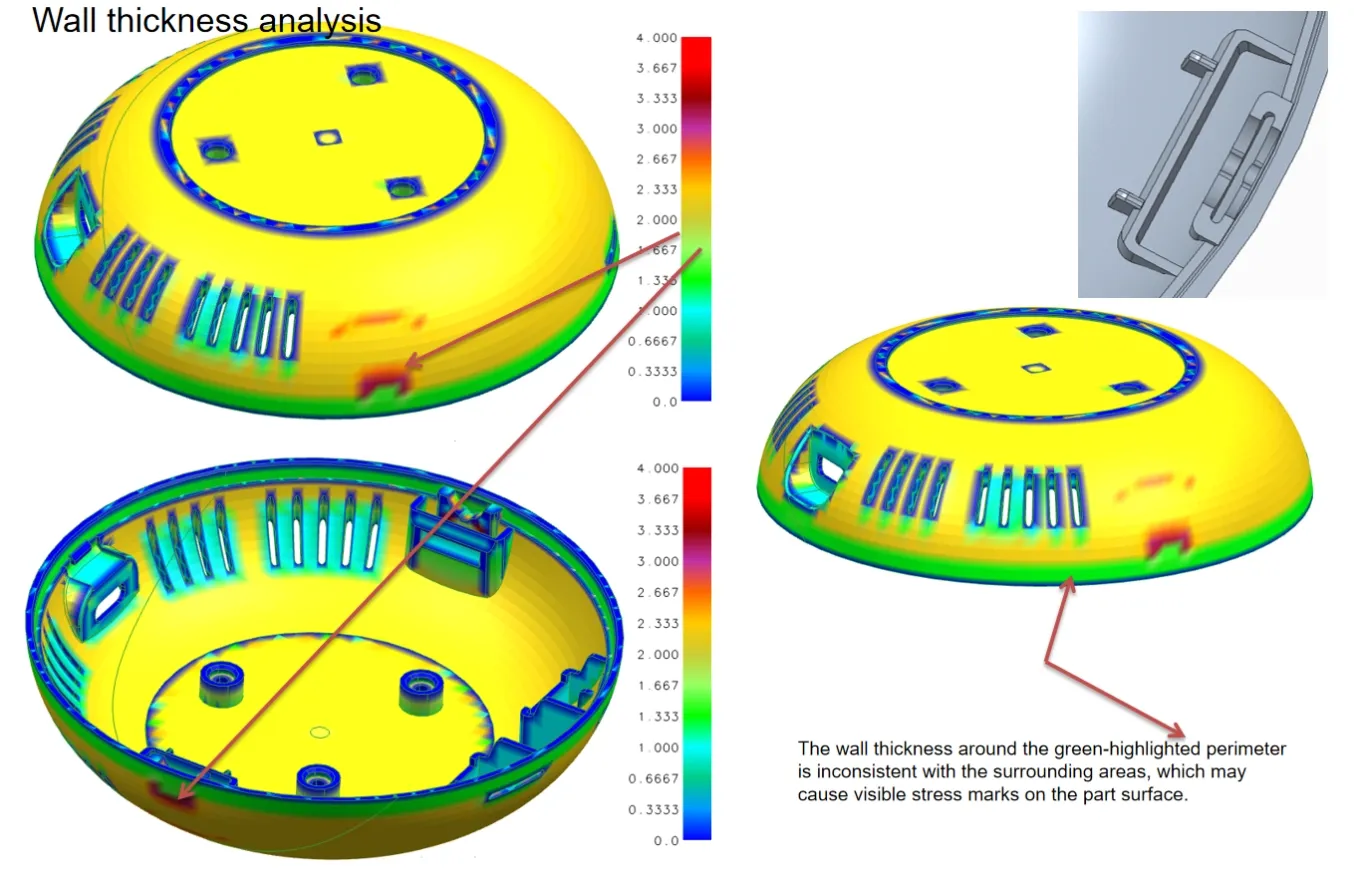
A mold design should not only look correct on the drawing. It must also be practical to machine, assemble, try out, adjust, maintain, and run repeatedly in production.
At Jeancen Mold, our senior tooling engineer brings more than 12 years of mold design experience, with an earlier hands-on background in mold fitting on the shop floor. That combination of design knowledge and production-floor reality shapes the way we approach every project.
Before steel cutting, these are the risks our engineering team reviews carefully on every new tooling project.
1. Mold Opening Direction
The mold opening direction affects much more than the basic mold structure.
It can influence the parting line, slider, and lifter layout, cosmetic surface risk, flash position, machining difficulty, ejection safety, and future maintenance.
A wrong decision at this stage may still be possible to correct later, but the correction is usually expensive. That is why we prefer to confirm mold direction early.
2. Gate Location and Gate Type
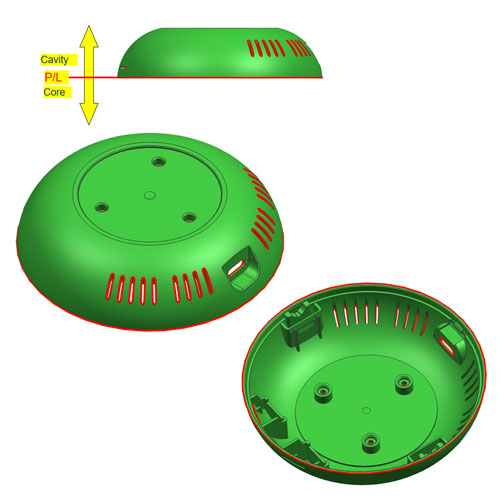
A gate is not only a filling point.
It affects flow path, weld line position, gate mark, warpage, trimming, cosmetic quality, and sometimes assembly.
For housing parts, the gate decision should be reviewed together with wall thickness, appearance surfaces, functional areas, and production stability. The easiest gate location is not always the safest one.
3. Draft Angle
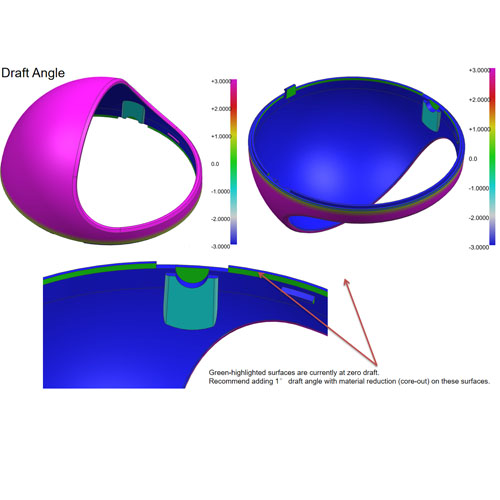
Draft angle is necessary for molding, but it cannot be added blindly.
Some vertical faces may be functional surfaces. Some may be assembly surfaces. Some may be cosmetic or sealing areas.
If the review only considers the mold side, the part may become easier to release but harder to assemble. A good draft review should respect both molding feasibility and product function.
4. Wall Thickness Risk
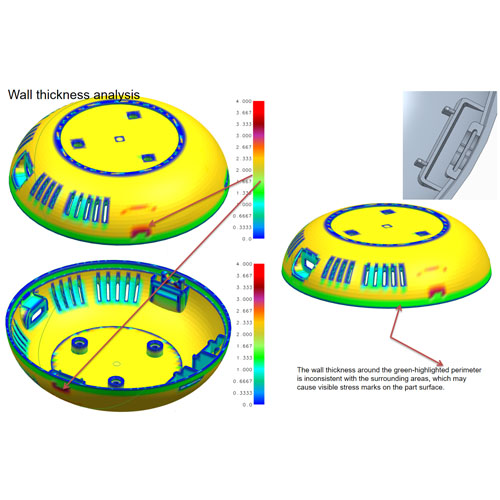
Many sink marks and stress marks start from the wall thickness.
Local thick areas, ribs behind cosmetic surfaces, bosses, shut-off areas, and sudden thickness changes all need attention before steel cutting.
A small CAD adjustment before tooling can often prevent a larger mold correction after T0.
5. Insert Layout
Insert design is not only about splitting the mold.
It is also about machining feasibility, venting, steel strength, replacement, repair, and long-term production stability.
In some areas, using inserts can reduce machining risk and make maintenance easier. In other areas, too many inserts may increase parting line or flash risk. This is why insert layout needs practical engineering judgment — not a template approach.
6. Ejection and Maintenance
A mold should not only make one good sample.
It should eject parts safely, run repeatedly, and be maintainable after production starts.
Ejector pins, blades, sleeves, lifters, sliders, spare parts, and access for repair all need to be considered during design. If these details are ignored, the mold may pass T0 but create problems during mass production.
Why These 6 Risks Matter Before Steel Cutting
Good mold design is not only about completing a 3D mold structure. It is about reducing risk before steel is cut.
A small design discussion early in the project can prevent a large correction later. That is why DFM review, mold direction, gate, draft, wall thickness, insert layout, and ejection should be discussed before tooling starts — not after the first trial exposes the problem.
At Jeancen Mold, these six areas are part of our standard engineering review for every new tooling project. If you are developing a new plastic part, an early DFM review can help identify the main tooling risks before steel is cut.