Jul 30, 2026Technical Case Studies
Case Study: Why S136 ESR is the Superior Choice for High-Volume PC Injection Molding
Case Study: Why S136 ESR is the Superior Choice for High-Volume PC Injection Molding Project Background & Client Requirements In a recent precision project involving Covestro PC grade AL2447 , our en
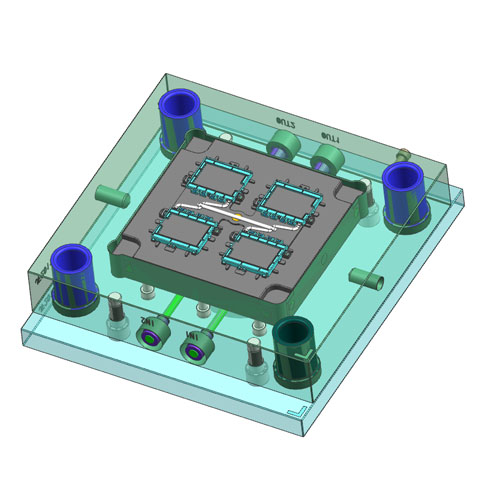
Polycarbonate, commonly known as PC, is widely used in transparent functional parts, electronic components, automotive lighting applications, and high-strength plastic products.
PC offers excellent impact strength, heat resistance, dimensional stability, and transparency. But from a tooling perspective, PC injection molding also places higher demands on mold material selection than many standard plastics.
In one recent precision project using Covestro PC grade AL2447, Jeancen Mold selected S136 ESR stainless mold steel instead of standard P20 or 718H-type steel.
This was not an over-specification decision.
It was a risk-control decision based on the material behavior, surface quality requirement, expected production volume, and long-term mold stability.
Project Background and Client Requirements
The project involved a transparent PC component requiring both appearance quality and long-term production stability.
The client had three non-negotiable requirements:
- Optical appearance: stable transparency and high-quality mirror surface finish
- Precision: strong structural performance and dimensional consistency
- Scale: an annual production target of approximately 500,000 pieces
At first glance, the project looked like a standard transparent PC injection molding case.
But during engineering review, the key question was not only whether the part could be molded.
The more important question was:
Can the mold maintain stable surface quality and dimensional performance across the intended production lifecycle?
That question directly influenced the mold steel decision.
Why PC Injection Molding Requires Careful Mold Steel Selection
PC is not always difficult to mold, but it is less forgiving than many standard thermoplastics.
From a mold material perspective, three PC characteristics are especially important.
1. High Processing Temperature
PC usually requires relatively high processing temperatures. In this project, processing temperatures could exceed 300°C.
At these temperatures, mold steel must withstand repeated thermal cycling and long-term production stress.
If PC material is not dried properly or if residence time is too long, degradation byproducts may be released during molding. Over time, these byproducts can attack mold cavity surfaces, especially when the mold steel does not have sufficient corrosion resistance.
This type of damage does not always appear immediately.
It may show up later as surface deterioration, micro-pitting, more frequent polishing, or unstable appearance quality.
For transparent PC parts, even small cavity surface defects can become visible on the molded component.
2. High Surface Sensitivity
Transparent PC parts are more sensitive to mold surface condition than ordinary structural components.
Even when the part is not a true optical lens, transparency makes surface defects easier to see.
Common risks include:
- Surface haze
- Flow marks
- Stress marks
- Micro-pitting transfer
- Loss of gloss
- Inconsistent transparency
- Polishing marks
- Surface degradation after repeated production
For this reason, the mold steel must not only be polishable at the beginning. It must also maintain that surface quality over time.
3. Lifecycle Stability
Many buyers focus on whether the mold can produce acceptable samples at T0 or T1.
For this project, that was not enough.
With an annual production target of approximately 500,000 pieces, the mold needed to support stable production over time.
The key risks were:
- Cavity surface degradation
- Loss of mirror finish
- Increased polishing frequency
- Production downtime
- Dimensional instability
- Higher maintenance cost
- Appearance defects during later production stages
A lower-cost steel may have reduced the initial mold price, but it would have increased lifecycle risk.
Why Standard P20 or 718H Was Not the Best Fit
Standard P20 or 718H-type mold steels can be suitable for many medium-volume plastic parts.
They are commonly used for general-purpose injection molds and can be cost-effective when the resin, surface requirement, and production volume are not too demanding.
However, this project involved a different risk profile.
The part required:
- Transparent PC molding
- High surface brightness
- Mirror finish stability
- Good dimensional consistency
- Medium- to high-volume production
- Lower maintenance risk over the production lifecycle
For this reason, the decision could not be based only on the initial tooling cost.
The mold material needed to match the real application.
Why S136 ESR Was Selected
Jeancen selected S136 ESR for two main engineering reasons: corrosion resistance and long-term polish stability.
1. Superior Corrosion Resistance
Under high-temperature PC processing conditions, standard steels may suffer from surface attack over time.
This can lead to gas etching, micro-pitting, and gradual cavity surface deterioration.
S136 ESR contains high chromium and offers stronger corrosion resistance than standard pre-hardened steels.
For transparent PC parts, this matters because the cavity surface condition directly affects molded part appearance.
A stable cavity surface helps reduce the risk of visible defects, repeated polishing, and production interruption.
2. Long-Term Mirror Finish Stability
For a 500,000-piece annual production project, maintaining a consistent mirror finish is critical.
The ESR process improves steel cleanliness and reduces inclusions. This supports better polishing performance and more stable surface quality.
For transparent or high-gloss PC parts, polish stability is not just a cosmetic issue. It affects the consistency of the final molded product.
By selecting S136 ESR, the mold was better positioned to maintain surface quality over repeated production cycles.
Engineering Decision: Not Over-Specification, But Risk Control
It would be easy to view S136 ESR as a more expensive steel choice.
But for this project, the better question was not:
“Which steel is cheaper?”
The better question was:
“Which steel can support the surface requirement, production volume, and long-term stability target?”
This is the difference between cost cutting and engineering risk control.
A lower-cost steel may reduce the initial mold quotation. But if it increases polishing frequency, mold maintenance, downtime, or appearance defects, the total cost may become higher.
What Buyers Should Check Before Approving Mold Steel for PC Injection Molding
Before approving a PC injection mold quotation, buyers should ask:
- Is the part transparent, glossy, optical, or purely structural?
- What PC grade will be used?
- Is the material UV-stabilized, flame-retardant, filled, or transparent?
- What is the annual production volume?
- What surface quality is required?
- What cavity/core steel is proposed?
- Why is this steel suitable for PC molding?
- What mold life is expected?
- Is mirror polishing required?
- Will steel certificates be provided?
- How will corrosion and polishing stability be controlled?
- Does the mold design support stable venting, cooling, and ejection?
These questions help avoid a common mistake: comparing mold quotations only by price while ignoring lifecycle risk.
Key Takeaway
For PC injection molding, mold material selection is not just a purchasing detail.
It is a risk-control decision.
S136 ESR is not necessary for every PC part. But for transparent PC components, mirror-finish surfaces, high-gloss appearance requirements, and medium- to high-volume production, it can be the more reliable long-term choice.
In this project, Jeancen selected S136 ESR because it supported:
- Corrosion resistance under high-temperature PC processing
- Long-term mirror finish stability
- Reduced maintenance risk
- More consistent transparent part appearance
- Better lifecycle cost control
The decision protected the project from avoidable surface and maintenance problems later in production.
Need Help Reviewing Mold Steel for a PC Injection Molding Project?
Jeancen Mold supports mold design, mold manufacturing, DFM review, mold steel selection, tooling validation, and injection molding for PC, PMMA, ABS+PC, PA66+GF, TPU, PBT, and other engineering materials.
If you are developing a transparent PC component, optical part, lighting component, electronic housing, or functional molded product, we can help review the key tooling risks before steel is cut.
Send your project information to:
info@jeancen.com
Jeancen Mold helps buyers reduce injection molding risk before tooling begins — through practical DFM review, mold material selection, and production-focused tooling strategy.