Jul 1, 2026Engineering Insights
From Physical Sample to Injection Mold: What Should Be Reviewed Before Steel Cutting
When no CAD data or drawings exist, a physical sample can start the tooling process — but it should not be treated as the full design truth.
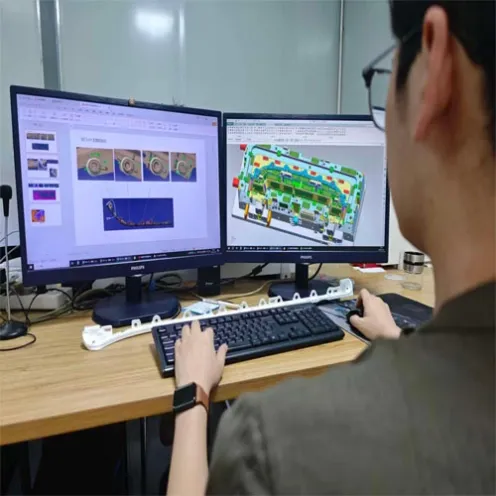
Sometimes a customer does not have 2D drawings or 3D CAD data. They only have a physical sample.
This is not unusual. It happens with old parts, discontinued products, replacement components, product upgrades, or small-batch custom projects. In many cases, tooling development can still begin from a sample.
But at Jeancen Mold, we never treat a physical sample as the full design truth.
A sample can show the shape. It does not always reveal the original design intent, material specification, tolerance requirements, shrinkage history, assembly conditions, or which dimensions are functionally critical.
That is why sample-based tooling projects require more engineering review before steel cutting — not less.
1. A Sample Can Start the Quotation, but It May Not Be Enough for a Final Mold Decision
For simple plastic parts, a physical sample may be sufficient for a rough tooling estimate. Simple covers, basic housings, washers, spacers, and parts without undercuts or tight assembly requirements can often be assessed quickly from a sample.
But for more complex parts, the situation is different. If the part has side holes, clips, threads, deep ribs, tight fit areas, sealing surfaces, curved surfaces, or small functional details, the sample needs to be evaluated more carefully. The mold may require sliders, lifters, inserts, special ejection, cooling review, or steel-safe adjustment areas.
Before providing a reliable quotation for a complex sample-based project, our engineering team needs to understand:
- Material requirement
- Annual quantity or target mold life
- Surface requirement
- Assembly function
- Critical dimensions
- Tolerance requirement
- Whether the part needs waterproofing, a friction fit, or sealing
- Whether the sample is new, used, worn, or already deformed
Without this information, a quotation may look fast — but the real tooling risk is not yet clear.
2. A Scanned Model Is Not Automatically a Mold-Ready Model
Reverse engineering usually starts with 3D scanning or detailed measurement. The scan can capture the current geometry of the sample. But the scan is only the beginning.
A physical sample may already include shrinkage from the old mold, warpage after molding, wear from use, flash or trimming marks, deformation from assembly, missing draft angles, unclear parting line marks, or local damage and aging.
If the reverse model directly copies everything from the sample, it may also copy the problems.
That is why reverse modeling at Jeancen not only rebuilds the outer shape. Our engineering team evaluates what should be kept, what should be corrected, and what should be confirmed with the customer before moving forward.
For example, if a snap-fit is worn, the worn shape should not be blindly reproduced. If a wall is too thick and causes sink marks in the old sample, the structure should be reviewed for possible adjustment. If a vertical wall has no draft, the team needs to check whether draft can be added without affecting the assembly.
A good reverse model should be manufacturable — not just visually similar to the sample.
3. The Most Important Question: Which Dimensions Are Critical?
When there is no drawing, every dimension may appear equally important. But in real tooling work, not every dimension has the same function.
Some dimensions are only appearance-related. Some control assembly fit. Some control sealing. Some control screw engagement. Some control movement or alignment. And some are simply artifacts of the old molding process — not the original design target.
Before mold design, our team works to identify the critical areas first:
- Mating surfaces
- Screw bosses
- Snap-fit hooks
- Sealing faces
- Positioning ribs
- Holes and slots
- Hinge or rotation areas
- Areas that contact metal parts or other components
If the customer can provide the mating part, that is extremely helpful. If the part needs to fit into another product, the sample alone may not be enough — the real fit depends on both sides of the assembly.
This is why, for sample-based projects, we often request assembly information before moving too far into mold design.
4. DFM Review Is Still Necessary After Reverse Engineering
Some people assume that reverse engineering means copying the part and cutting the mold. At Jeancen Mold, we approach it differently.
After the 3D model is rebuilt, it still needs a full DFM review. Before steel cutting, the team should evaluate:
- Wall thickness balance
- Rib thickness
- Draft angle
- Undercuts
- Parting line
- Gate location
- Ejection risk
- Shrinkage direction
- Possible sink marks and warpage
- Cosmetic surface requirements
- Insert or slider requirement
- Assembly fit risk
For injection molding, the target is not only to match the sample shape. The target is to produce the part repeatedly with stable quality.
Sometimes small changes to the reverse model are necessary — adding draft for safe ejection, adjusting rib thickness to reduce sink marks, adding radius to avoid stress concentration, modifying a local wall to improve filling, leaving steel-safe areas for fit adjustment, or simplifying a non-critical detail to reduce mold complexity.
These changes should always be discussed with the customer. Functional areas should never be modified without confirmation.
5. High-Precision Parts Need Extra Caution
Not every part is suitable for sample-only tooling.
For parts with tight tolerance, optical requirements, sealing requirements, gear engagement, medical use, or precision electronic assembly, a sample alone may not be sufficient.
A 3D scanner can capture geometry, but it cannot fully replace a proper engineering drawing with tolerances and functional notes.
For these projects, Jeancen recommends creating a 2D drawing for critical dimensions after reverse modeling. The drawing should define critical dimensions, tolerance requirements, material, surface finish, inspection points, assembly requirements, and areas that cannot be changed.
This helps avoid misunderstanding later. It also gives the mold maker and customer the same inspection reference after T0.
6. Sample Condition Should Be Recorded Before the Project Starts
One detail that is often overlooked: the condition of the sample itself.
Before scanning or measuring, it is important to record whether the sample has deformation, scratches, flash, broken clips, worn surfaces, assembly marks, color aging, missing parts, or signs of trimming or repair.
If the customer wants the new part to be exactly like the sample, the team needs to know whether the sample itself is correct. If the customer wants to improve the part, the team needs to know what should be improved.
This sounds simple, but it prevents many discussions later in the project.
7. IP and Confidentiality Should Be Confirmed Early
For sample-based mold projects, one more point should be addressed at the beginning: ownership.
The part should be the customer's own design, or the customer should have the legal right to reproduce it. If needed, an NDA should be signed before the sample, scan data, CAD model, or drawings are shared.
At Jeancen Mold, we take this step seriously. It protects the customer and keeps the project clean from the start.
From Sample to Production-Ready Mold
Can an injection mold be built from only a physical sample? In many cases, yes.
But the sample is only the starting point. A reliable process should include sample review, measurement, reverse engineering, DFM review, customer confirmation, mold design, trial, and validation.
The biggest risk is not that there is no drawing. The biggest risk is assuming the sample already contains all the information needed for tooling. It usually does not.
Before steel cutting, the engineering team needs to understand the real function of the part, the critical dimensions, the material behavior, the assembly conditions, and the molding risks. That is how a physical sample becomes a production-ready plastic part — not by copying it blindly, but by turning it into a clear and manufacturable engineering input.
Need Help Starting a Mold Project from a Physical Sample?
If you have a plastic part sample but no CAD data or drawings, our engineering team can help evaluate the part, review the critical dimensions, and assess the tooling feasibility before mold design begins.
Share your sample photos, material information, and assembly requirements with us. We can help identify the main risks and provide practical direction before steel is cut.