High-Precision Molds
TPU Molded Parts Manufacturer | DFM Support for Custom TPU Components
Custom TPU molded parts with engineering-driven DFM support, mold design, and production-focused review to improve manufacturability, surface quality, and long-term molding stability.
At Jeancen, we manufacture custom TPU molded parts for applications that require flexibility, wear resistance, and stable production performance. We support customers with early DFM review, mold design, and production-focused engineering to reduce tooling risk before steel is cut.
TPU projects often require closer attention to wall thickness, draft angle, surface finish, demolding behavior, and material flow than many standard rigid plastics. That is why we focus not only on mold making, but also on manufacturability and long-term production stability.
What We Make
We produce custom TPU molded components for projects that require a balance of elasticity, durability, and dimensional consistency. Depending on the part design and application, we support development of:
- Flexible protective components
- Sealing and cushioning parts
- Functional soft-touch elements
- Industrial and consumer-use TPU components
- Custom molded parts with texture or appearance requirements
Whether your project starts from a 2D drawing, 3D file, sample, or concept sketch, our team reviews manufacturability before tooling begins.
Why TPU Parts Require More Engineering Attention
TPU is a versatile material, but it can create molding challenges if the part design is not reviewed carefully at the early stage. Compared with many rigid plastics, TPU projects often require closer control over:
- Wall thickness balance
- Shrinkage-related deformation risk
- Surface defect sensitivity
- Draft angle for safe demolding
- Texture compatibility
- Material flow in complex geometry
- Tooling material selection for long-term consistency
If these factors are overlooked too early, the result may be unstable molding, surface defects, demolding difficulty, or unnecessary tooling revisions later.
Our Engineering Approach for TPU Projects
We take an engineering-first approach before mold manufacturing begins. Our team reviews the part design to identify molding risks early and improve production feasibility before tooling is released.
Wall Thickness Review
We evaluate thickness transitions and local heavy sections to reduce the risk of sink marks, inconsistent filling, or unstable part performance.
Draft Angle Optimization
For textured surfaces or complex side geometry, draft angle must be designed carefully to support smooth ejection without scratching or surface damage.
Surface and Appearance Consideration
For TPU parts with visible surfaces, texture and finish requirements need to be matched with the demolding strategy and the behavior of the selected material.
Material and Tooling Matching
We consider the TPU grade, expected production volume, and wear conditions when planning mold structure and steel selection.
Production Stability Thinking
Our goal is not just to make the mold workable, but to support more stable trial runs, smoother process setup, and better long-term production consistency.
Typical Applications
TPU molded parts are widely used in applications that require flexibility, grip, sealing performance, wear resistance, or impact absorption. These may include:
- Electrical and electronic protection parts
- Industrial functional components
- Consumer product accessories
- Flexible housings or covers
- Soft-contact components
- Custom sealing or buffer parts
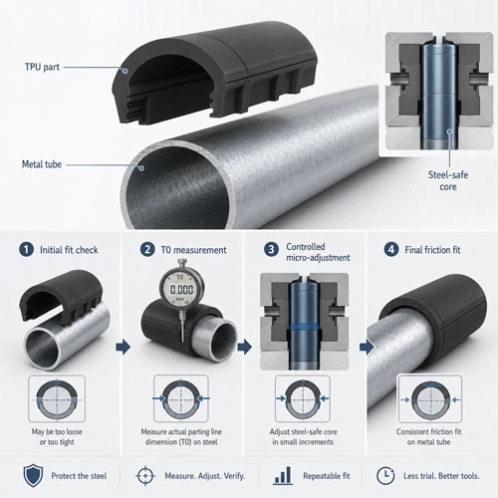
If your part also has tight fit requirements, cosmetic surfaces, or complex geometry, early DFM review becomes even more important.
From DFM to Mold Making and Production
Jeancen supports TPU projects through a practical workflow that includes:
- Design review and manufacturability feedback
- DFM suggestions before tooling release
- Mold design and mold manufacturing
- Trial support and engineering adjustment
- Injection molding production support
This helps customers avoid moving into tooling too early with unverified design assumptions.
Why Customers Work With Jeancen
Customers work with Jeancen not only for mold making, but also for practical engineering support during product launch.
Engineering-Driven Review
We focus on actual molding risks, not generic comments.
Better Risk Control Before Steel Cutting
We help identify issues earlier, when changes are easier, faster, and less costly.
Shopfloor-Informed Thinking
Our recommendations are based on tooling and production realities, not theory alone.
Support for Complex Plastic Components
We work on parts where fit, appearance, manufacturability, and mold reliability need to work together.
Related Case Study
See how our engineering team supported an Australian customer's TPU project through early DFM analysis and helped accelerate the path from inquiry to confirmed order.
Need Support for a TPU Project?
If you are developing a TPU component and want to reduce tooling risk before production begins, our team can review your design and provide practical feedback on manufacturability, tooling approach, and production stability.
Send us your 2D/3D drawing or sample to discuss your TPU molded part project.