Jun 26, 2026Engineering Insights
Family Mold Layout: Why Part Placement Should Consider Robot Picking
Family mold layout should consider not only cavity balance and filling, but also robot picking stability after ejection. Learn how part placement affects automated production.
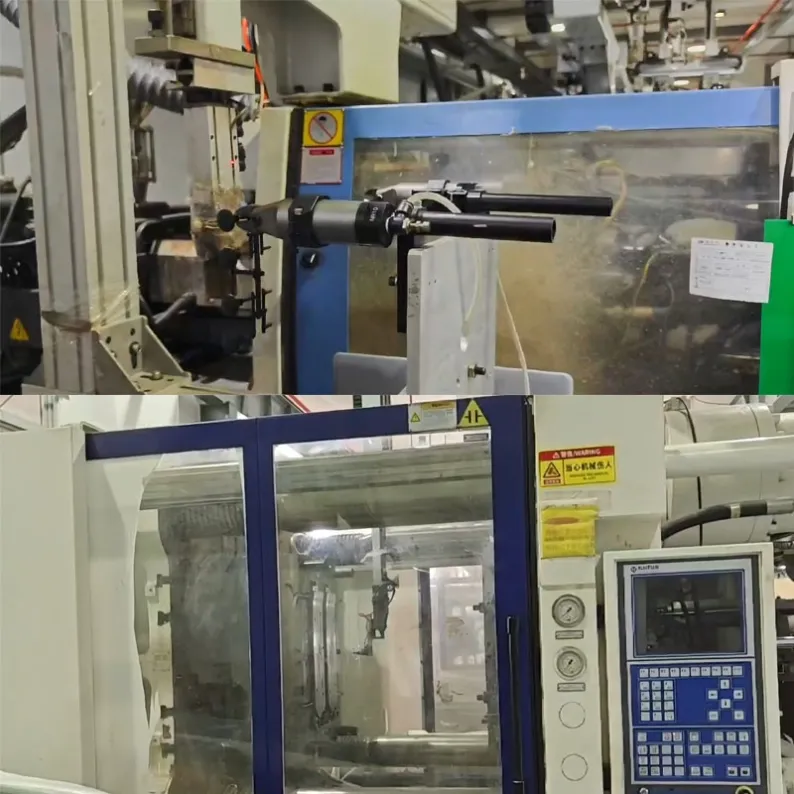
When a family mold includes both larger and smaller parts in the same tool, the first instinct is usually to focus on cavity balance, runner design, and filling consistency.
These are important. But there is another factor that is often overlooked during mold design — and only becomes a problem during production: how the robot picks the parts after ejection.
The Problem: Layout That Works in CAD but Fails in Production
A family mold may produce good T0 samples, but if the part layout makes robot gripping unstable, the issue will appear as soon as automated production begins.
Common problems include:
- The robot cannot grip small and large parts in one stable pick
- Small parts fall or shift during extraction
- The end-of-arm tooling requires a complex, custom design
- Cycle time increases because of unreliable part removal
- Parts are scratched or damaged during picking
These are not molding defects. They are production efficiency problems caused by a layout decision made too early without considering automation.
A Practical Layout Principle
At Jeancen Mold, when reviewing family molds with mixed part sizes, we typically consider placing smaller parts closer to the top side (operator side) and larger parts closer to the bottom side (non-operator side), depending on the mold structure and picking direction.
This is not a universal rule — it depends on the specific mold configuration, machine orientation, and robot setup. But the principle behind it is consistent: part layout should support stable, repeatable robot extraction, not only cavity balance.
A layout that considers robot picking from the start can improve:
- Picking stability and gripping space
- Part protection after ejection
- Cycle consistency during automated production
- Risk reduction for dropped, scratched, or misaligned parts
When to Review This
This type of review is most valuable when the mold includes two or more different parts in one tool, automated production is planned, and part sizes or weights vary significantly between cavities.
The best time to discuss it is during mold concept review — before the cavity layout is locked and steel is ordered.
Start Your Mold Layout Review
If you are reviewing a new plastic part before mold build, Jeancen Mold can help evaluate tooling risk, DFM feasibility, and production stability before steel cutting.