Jun 26, 2026Engineering Insights
Large Mold Block Split Machining: How to Reduce Deformation Risk Before Steel Cutting
For large injection molds, split machining can help reduce deformation risk, improve machining stability, and protect cosmetic or functional product surfaces.
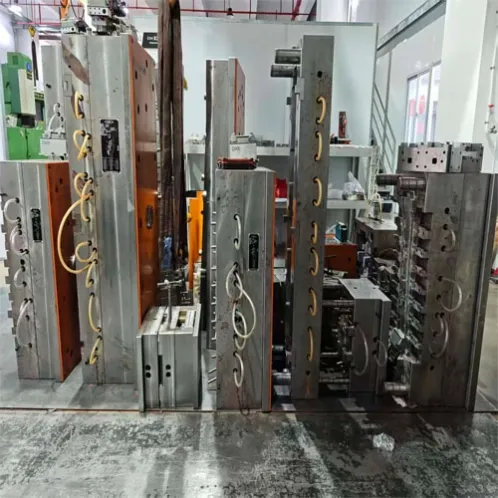
For large injection molds or molds with large-area product surfaces, machining the entire mold block as one piece may seem like the simplest approach. But in practice, single-block machining of large steel components can introduce deformation risks that are difficult to correct later.
Why Large Mold Blocks Can Deform During Machining
When a large block of mold steel is machined as one full piece, several factors can contribute to small but meaningful deformation:
- Internal stress release during material removal
- Heat buildup from extended machining operations
- Uneven load distribution during cutting sequences
- Dimensional shift after heat treatment
The deformation may not be immediately obvious. But over time, it can affect parting line fit, cosmetic surface quality, curved surface transitions, local flash risk, polishing results, and final assembly dimensions.
For molds where surface quality or dimensional precision matters, even small deformation can create problems that are expensive to correct after the tool is assembled.
When Split Machining Makes Sense
At Jeancen Mold, for certain large mold projects, we evaluate whether splitting the mold block into separate machined sections or inserts can reduce machining risk while maintaining product surface integrity.
A well-planned split design can provide several advantages:
- More stable machining with smaller, more manageable steel sections
- Better control over heat treatment and stress relief
- Easier local adjustment or replacement if correction is needed later
- Improved long-term mold maintainability
However, split machining must be planned carefully. The split line, shut-off area, and curved surface transition must be placed in positions where they will not affect the product's visible surface, functional area, or assembly dimensions.
Three Conditions for a Good Split Design
A good split machining strategy should meet three conditions:
- Easier to machine — each section can be cut with better precision and access
- Safe for product appearance — the split line does not create visible marks, step lines, or mismatches on the molded part surface
- Practical for future maintenance — individual sections can be adjusted, polished, or replaced without reworking the entire block
The purpose of splitting a large mold block is not to make the mold more complicated. It is to reduce machining risk and improve long-term mold stability.
Start Your Mold Design Review
If you are reviewing a new plastic part before mold build, Jeancen Mold can help evaluate tooling risk, DFM feasibility, and production stability before steel cutting.