Jul 30, 2026Engineering Insights
Why 30% of Automotive Light Guides Fail: Mastering "Optical Tooth" Accuracy in PMMA Molding
Why 30% of Automotive Light Guides Fail: Mastering "Optical Tooth" Accuracy in PMMA Molding Introduction: The "Dim End" Problem We recently audited a failed project for a Tier-1 automotive supplier. T
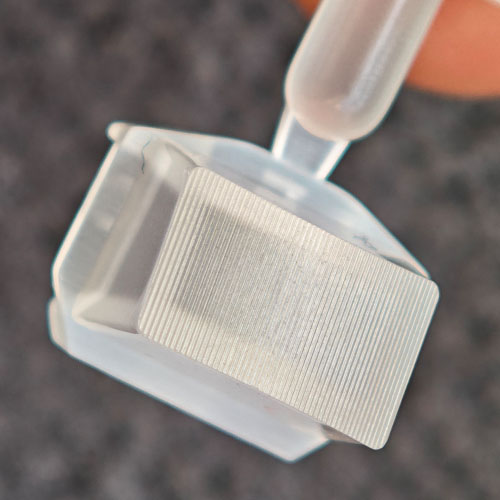
Automotive ambient light guides look simple from the outside.
A transparent PMMA strip receives light from an LED source and distributes it across the dashboard, door panel, console, or interior trim area.
But in real production, this type of part is not a standard injection molding project.
It is a combined challenge involving optical design, mold precision, PMMA material control, surface quality, gate strategy, process stability, and final light uniformity validation.
A small mistake in the mold can create a visible lighting defect. A rounded optical tooth, poor surface finish, incorrect gate position, trapped contamination, or excessive PMMA residence time can turn a well-designed light guide into a rejected part.
At Jeancen Mold, we treat automotive light guide molding as an optical tooling project, not just a plastic part project.
The Common Problem: The “Dim End” Effect
One common failure in automotive ambient light guides is uneven brightness.
The light guide may look bright near the LED source, but the light becomes weaker or inconsistent further away from the source.
In many cases, people first blame the LED supplier or PMMA material batch.
But the real cause may be in the mold.
For light guides, the optical teeth — the tiny prism-like structures that control light extraction — determine how light exits the part. If these structures are not machined correctly, the light will not follow the intended optical path.
A light guide depends on thousands of small optical features working together. If the tooth angle, edge radius, or surface roughness is incorrect, the result can be:
- Dim areas
- Uneven brightness
- Scattered light
- Muddy light output
- Visible inconsistency along the light strip
- Failed customer lighting evaluation
For automotive interior lighting, this is not acceptable. The part is visible to the end user, so any optical defect becomes a quality issue.
Project Background: Automotive Interior Ambient Light Guide
This project involved a high-precision PMMA ambient light guide used in an automotive interior lighting system.
The customer was an automotive OEM / Tier 1 supplier developing interior ambient lighting components for passenger vehicles.
The light guide was a visible interior component. This meant that any optical defect, color inconsistency, yellowing, gate mark, ejector trace, or surface imperfection would be immediately noticeable.
The project required not only successful molding, but stable optical performance suitable for mass production.
Key project requirements included:
- Application: automotive interior ambient lighting
- Material: optical-grade PMMA
- Stable transparency and light output
- Strict optical surface quality
- Consistent light uniformity
- No visible yellowing or color shift under white LED illumination
- No gate marks or ejector traces in light-emitting areas
- Tooling and process stability suitable for automotive-level evaluation
This was not simply a question of whether PMMA could be molded.
The real question was:
Can the mold and process maintain stable optical quality during repeated production?
Why Standard Injection Molding Is Not Enough for Optical Light Guides
For standard plastic housings, small surface or geometry variations may be acceptable.
For optical light guides, they are not.
An automotive PMMA light guide must control how light enters, travels, reflects, and exits the part. That means the mold must accurately reproduce very small optical structures.
Standard moldmaking methods may be sufficient for ordinary structural or cosmetic parts, but optical light guides require tighter control over:
- Mold insert accuracy
- Optical tooth geometry
- Surface roughness
- Edge radius
- Tool runout
- Material residence time
- Gate position
- Ejection location
- Mold temperature
- Cleanliness during polishing and molding
If these details are not controlled, the final part may pass a basic dimensional check but fail the actual lighting test.
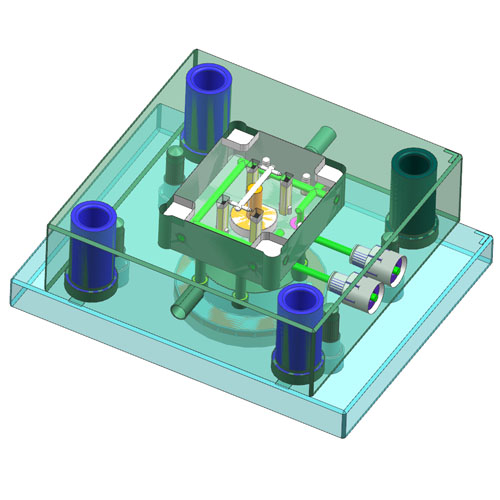
Technical Requirements for Optical PMMA Light Guide Molding
For this project, the customer defined clear optical and automotive-level requirements.
Key technical requirements included:
- Material: optical-grade PMMA
- Product surface roughness: Ra ≤ 0.015 μm
- Mold optical surface roughness: Ra ≤ 0.08 μm
- Optical tooth profile accuracy: < 0.02 mm
- Edge radius control: R < 0.02
- Tool runout control: within 0.003 mm
- Light uniformity: must meet automotive interior lighting evaluation standards
- Color stability: no yellowing or color shift under white LED illumination
- Gate and ejector design: not allowed in light-emitting areas
These requirements directly influenced the mold structure, insert strategy, machining method, polishing control, gate design, injection process, and inspection plan.
The goal was not only to create a smooth surface.
The goal was to preserve the designed optical path.
Challenge 1: Optical Tooth Accuracy
The optical tooth area is one of the most critical features in an automotive light guide.
A light guide works by directing light through controlled reflection and refraction. The optical teeth are designed to extract light at specific positions and intensities along the part.
If the teeth are too rounded, too rough, or dimensionally inconsistent, the light output changes.
Even a small geometry deviation can cause:
- Light scattering
- Reduced brightness
- Uneven illumination
- Poor optical efficiency
- Unstable appearance from one area to another
In this project, the optical tooth geometry had to be controlled with high precision.
Jeancen designed the optical tooth areas as separate precision mold inserts. This helped improve machining control, inspection access, and replacement flexibility if future optimization was required.
Why Standard EDM Can Be a Risk for Optical Teeth
Standard EDM can be useful in many moldmaking applications, but it is not always suitable for optical tooth surfaces.
The problem is surface texture and edge definition.
Standard EDM may leave a rougher surface texture and may not preserve a sharp enough tooth profile for optical performance. For a normal structural part, that may not matter. For a PMMA light guide, it can affect how light exits the part.
If the optical teeth have rounded corners or rough surfaces, light may scatter internally instead of exiting in the intended direction.
This can create the “dim end” effect, poor uniformity, or visible optical inconsistency.
For optical PMMA parts, the machining method must protect both geometry and surface quality.
Jeancen’s Solution: High-Speed Milling and Precision Insert Control
To meet the optical accuracy requirements, Jeancen used a precision machining strategy instead of treating the optical tooth area like a standard cavity feature.
The solution included:
- Separate optical tooth mold inserts
- High-speed machining above 42,000 rpm
- Diamond-coated cutting tools
- Strict tool runout control within 0.003 mm
- Controlled machining path for prism geometry
- Avoidance of unnecessary polishing on optical tooth surfaces
The reason for avoiding excessive polishing is simple: polishing can improve surface appearance, but it may also change the micro-geometry of the optical teeth.
For this application, the optical tooth shape had to be preserved.
The machining strategy needed to deliver both surface quality and dimensional accuracy directly from the manufacturing process.
Challenge 2: Preventing Yellowing and Color Shift in PMMA
PMMA is widely used for optical light guide applications because of its transparency and light transmission performance.
However, PMMA is sensitive to process conditions.
If the material is not dried properly, if the melt temperature is poorly controlled, or if residence time in the barrel or hot runner is too long, the material may degrade.
This can lead to:
- Yellowing
- Color shift
- Reduced transparency
- Flow marks
- Black specks
- Brightness variation
- Unstable optical appearance
For automotive interior lighting, yellowing is especially serious because the light guide is usually evaluated under LED illumination. Even slight color deviation may become visible.
This is why PMMA processing cannot be separated from mold design.
A good optical mold still needs a stable molding process to deliver consistent optical performance.
PMMA Process Control for Stable Light Performance
For this project, Jeancen controlled the injection molding process around several key points.
Material Drying Control
PMMA material was dried under strict conditions before molding.
Moisture control is essential for optical PMMA because poor drying may cause surface defects, bubbles, silver streaks, or reduced optical clarity.
Mold Temperature Control
Mold temperature was gradually adjusted and validated during trials.
The goal was to reduce internal stress, protect surface quality, and avoid sudden thermal conditions that could affect part appearance.
Hot Runner and Residence Time Control
The hot runner system and material residence time were carefully reviewed.
For optical PMMA molding, excessive thermal residence time can increase degradation risk.
The runner and gate design needed to support stable flow without creating unnecessary shear heat.
Gate Position Optimization
Gate positions were optimized to avoid optical influence, weld lines, and visible gate marks in light-emitting areas.
For visible automotive interior parts, gate design is not only a filling decision. It is also an optical and cosmetic decision.
Trial Validation
Injection parameters were validated through multiple trials before final approval.
The goal was to establish a stable process window, not just produce one acceptable sample.
Challenge 3: Avoiding Gate Marks and Ejector Traces in Light-Emitting Areas
For optical and visible automotive interior parts, gate and ejection design must be reviewed very carefully.
A gate mark or ejector mark may be acceptable on a hidden structural surface, but it is not acceptable in a light-emitting area.
In this project, the mold design had to ensure that:
- Gates were placed away from optical surfaces
- Ejector pins did not contact light-emitting zones
- Ejection force was balanced
- Part deformation during release was controlled
- Optical surfaces were protected during demolding
This required coordination between part design, mold design, and optical requirements.
The part had to be moldable, but it also had to preserve the lighting function and visual appearance.
Challenge 4: Cleanliness and Black Speck Control
In ordinary injection molding, a small particle may sometimes be tolerated depending on the application.
In optical PMMA molding, a single black speck can reject the part.
Black specks or contamination can come from degraded material, dirty equipment, poor purging, polishing contamination, airborne dust, or handling issues.
For optical molds, cleanliness must be controlled through the full process:
- Mold polishing environment
- Material handling
- Drying system
- Barrel and screw cleanliness
- Hot runner cleanliness
- Trial setup
- Operator handling
- Final inspection
Optical molds should not be treated the same way as standard ABS or PP molds.
The entire process needs a higher level of discipline.
Mold Steel Selection for Optical PMMA Components
Mold steel selection also affects optical part quality.
For transparent PMMA or PC parts, cavity surface quality and polish stability are critical.
In many optical or high-gloss applications, S136 ESR is commonly considered because of its cleanliness, corrosion resistance, and polishing performance.
For this type of project, steel selection should not be based only on the cheapest mold quote.
It should be based on:
- Required surface finish
- Optical appearance standard
- Production volume
- Maintenance expectations
- Polishing stability
- Corrosion risk
- Long-term surface performance
The right steel helps create a stable foundation for optical molding.
Quality Inspection and Validation
For automotive light guides, visual judgment alone is not enough.
The part must meet both optical data requirements and real visual performance requirements.
This project included multi-level inspection and validation.
Inspection items included:
- Optical surface roughness measurement
- Optical tooth geometry inspection
- Mold surface roughness verification
- Light uniformity testing
- Chromaticity and color consistency checking
- Final visual inspection under real lighting conditions
Only parts that met both measured optical requirements and actual lighting evaluation standards were approved for delivery.
This is important because some optical issues may not be obvious from dimensional inspection alone.
A part can be dimensionally correct but still fail light uniformity testing.
Project Results
Through coordinated control of mold design, machining, material drying, injection process, gate strategy, and inspection, the project achieved stable optical performance.
The final results included:
- Optical and cosmetic requirements successfully met
- Stable light uniformity across the full length of the guide
- No visible yellowing or color shift under specified LED conditions
- No gate marks or ejector traces in light-emitting areas
- Optical tooth geometry controlled for production requirements
- Tooling and process validated for mass production
- Customer evaluation and testing standards passed
The customer achieved a stable automotive interior ambient lighting solution suitable for series production.
What OEM and Tier 1 Customers Should Learn from This Case
Automotive light guide molding is not a standard plastic molding task.
Procurement teams, product engineers, and project managers should pay attention to several key points before starting tooling.
1. Optical Tooth Geometry Must Be Protected
The optical tooth is not just a molded feature. It is part of the optical function.
Machining method, tool selection, polishing strategy, and inspection must all protect the designed geometry.
2. PMMA Process Control Is Critical
Good material alone does not guarantee optical quality.
Drying, residence time, melt temperature, mold temperature, gate design, and process window validation all affect final light performance.
3. Gate and Ejection Strategy Must Respect Optical Areas
Visible light-emitting zones should not be treated like ordinary surfaces.
Gate marks, ejector traces, weld lines, or local stress marks can become visible under illumination.
4. Inspection Must Include Real Lighting Evaluation
Dimensional inspection is necessary, but not sufficient.
Automotive light guides should also be checked under real or simulated lighting conditions.
5. Tooling Precision and Process Stability Must Work Together
A precise mold without process control can still fail.
A stable process without correct optical mold geometry will also fail.
Success requires both.
Why This Matters for Automotive Lighting Projects
For automotive interior lighting, the final part affects perceived vehicle quality.
Uneven brightness, yellowing, black specks, or visible optical defects can make the interior look lower quality, even if the component is small.
This is why tooling decisions should be made before steel is cut.
Important decisions include:
- Optical insert strategy
- Mold steel selection
- Machining method
- Polishing control
- Gate location
- Ejection method
- PMMA drying and residence time
- Inspection standard
- Mass production validation plan
When these decisions are reviewed early, the project is more likely to move from design to production without repeated correction loops.
Conclusion
Automotive ambient light guides are highly sensitive optical components.
Their success depends on more than basic injection molding capability.
To produce a stable PMMA light guide, the moldmaker must control optical tooth accuracy, mold surface quality, PMMA process conditions, gate and ejection strategy, cleanliness, and final lighting validation.
For this project, Jeancen transformed complex optical requirements into a repeatable, production-ready molding solution by combining:
- Precision optical insert design
- High-speed machining
- Controlled optical tooth geometry
- PMMA process control
- Gate and ejection optimization
- Multi-level inspection and lighting validation
This case reflects how optical tooling knowledge and disciplined process control can help automotive customers achieve stable interior lighting performance.
Need Help Reviewing an Automotive Light Guide Project?
Jeancen Mold supports optical-grade injection molds, PMMA and PC light guide molding, DFM review, precision mold manufacturing, tooling validation, and production support for automotive and high-precision plastic components.
If you are developing an automotive ambient light guide, optical PMMA component, clear PC part, or visible interior lighting component, we can help review the main tooling and molding risks before steel is cut.
Send your project information to:
info@jeancen.com
Jeancen Mold helps buyers reduce optical molding risk before tooling begins — through practical DFM review, precision tooling strategy, and production-focused process control.